|
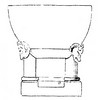
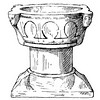
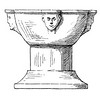
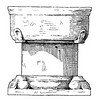
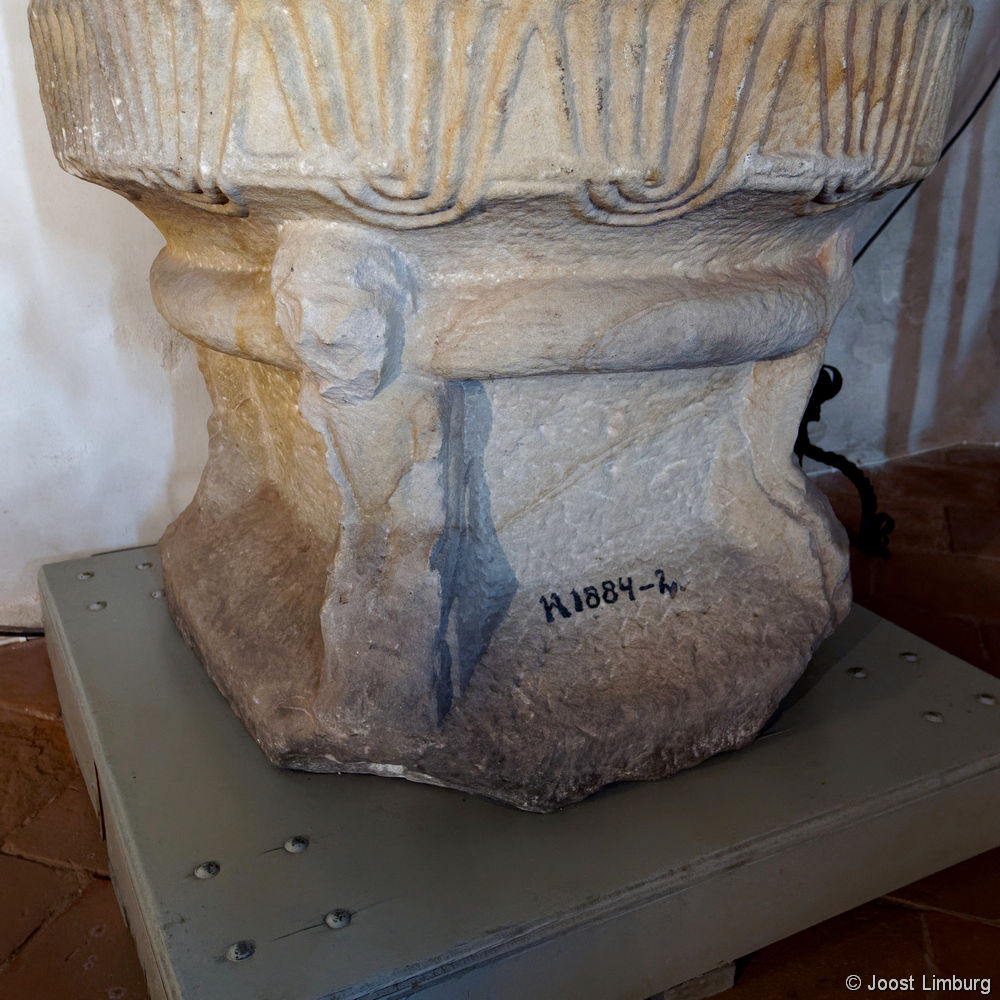
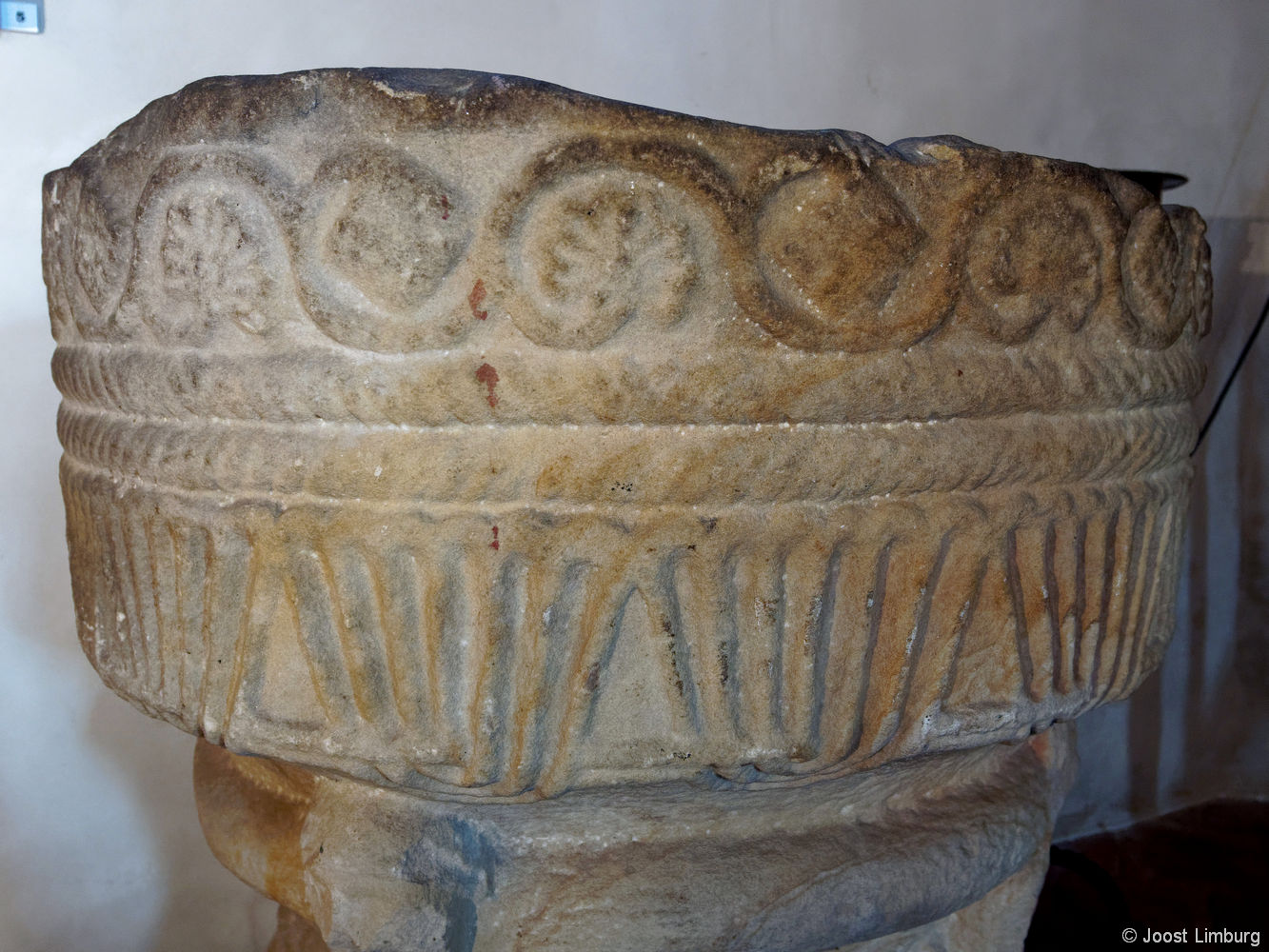
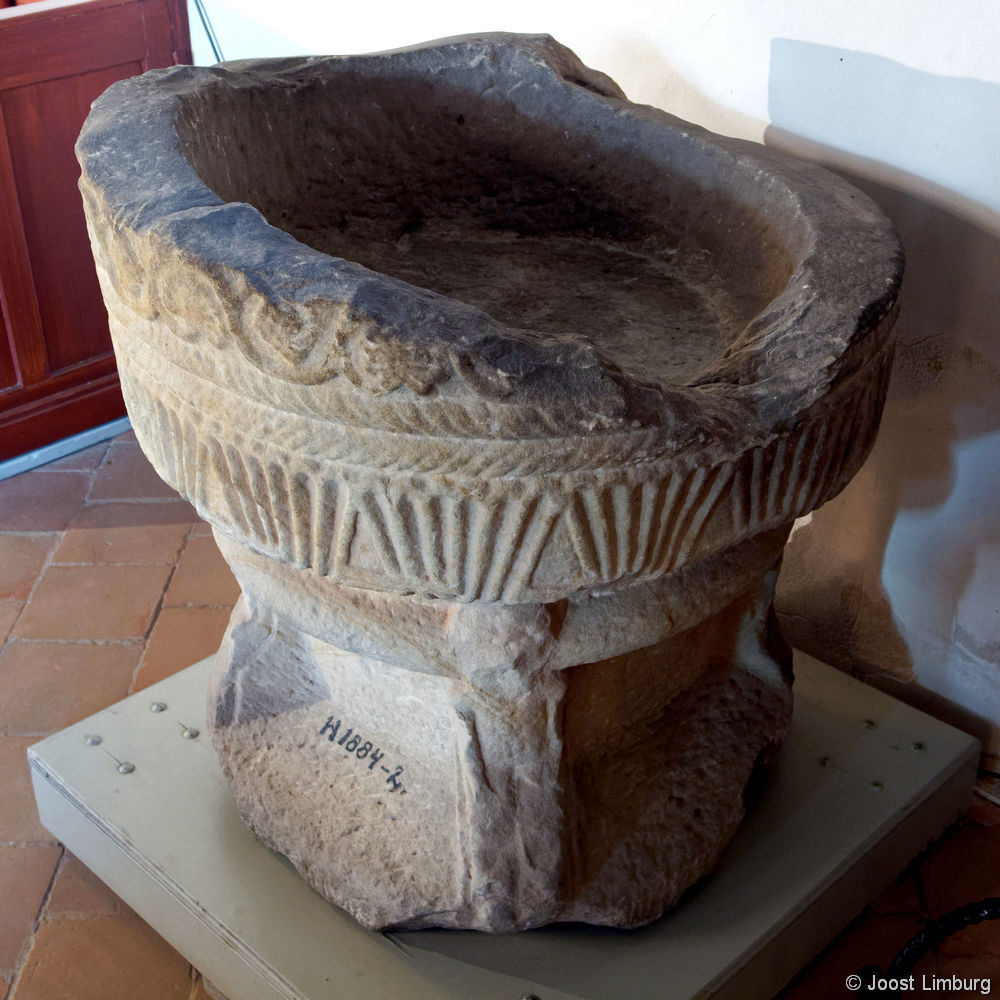
Romanesque Baptismal Fonts in the Netherlands
Romaanse doopvonten in Nederland
Latest update: August 19th 2025.
Please scroll down or choose from the list of towns and villages. Below the fonts are listed according to their current location.
Almen (Gelderland)
- Made: Mid 12th century.
- Material: Sandstone from Bentheim.
- Current and original location: Nederlands Hervormde Kerk, Almen.
- Original church: Replaced; the present church dates from the 14th century.
- References:
- Eyck tot Zuilichem, 1846
- Ligtenberg, 1915
- Ter Kuile, 1958
- Romaans Nederland, 1994
- Monumenten in Nederland, 2000
- Schönlank, 2001
- Drake, 2002
- Steensma, 2007
- RCE photo [1]
- Notes:
- In 1834 the font was found buried under the tower floor. In the early 20th century it was placed back in the church.
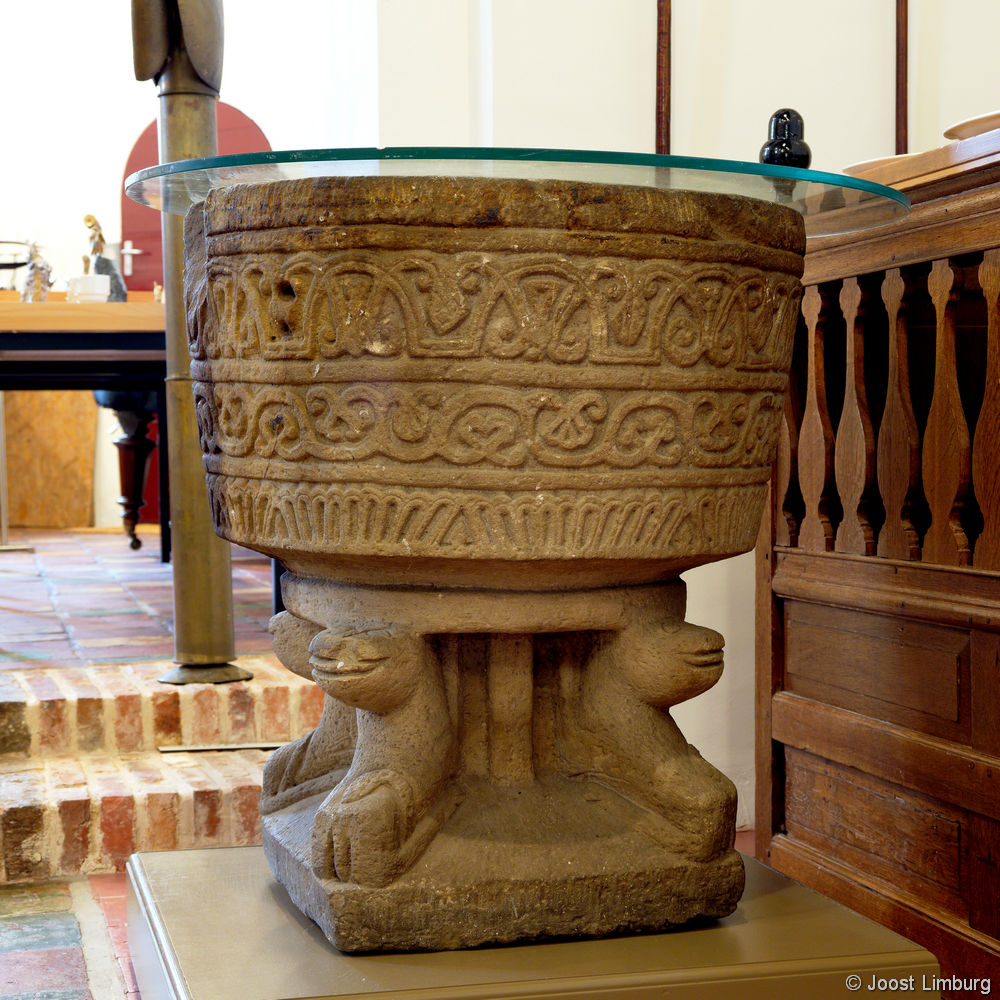
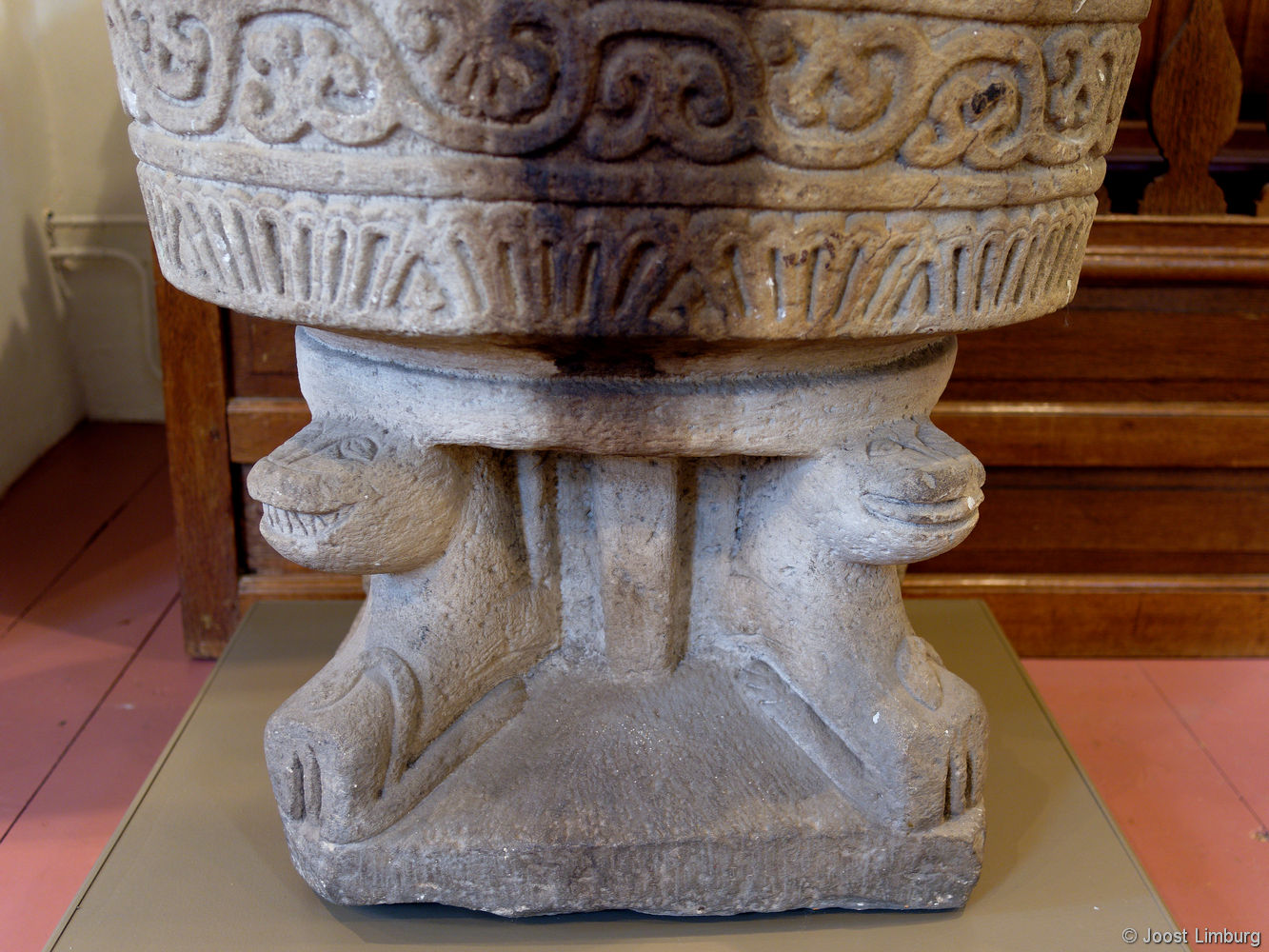
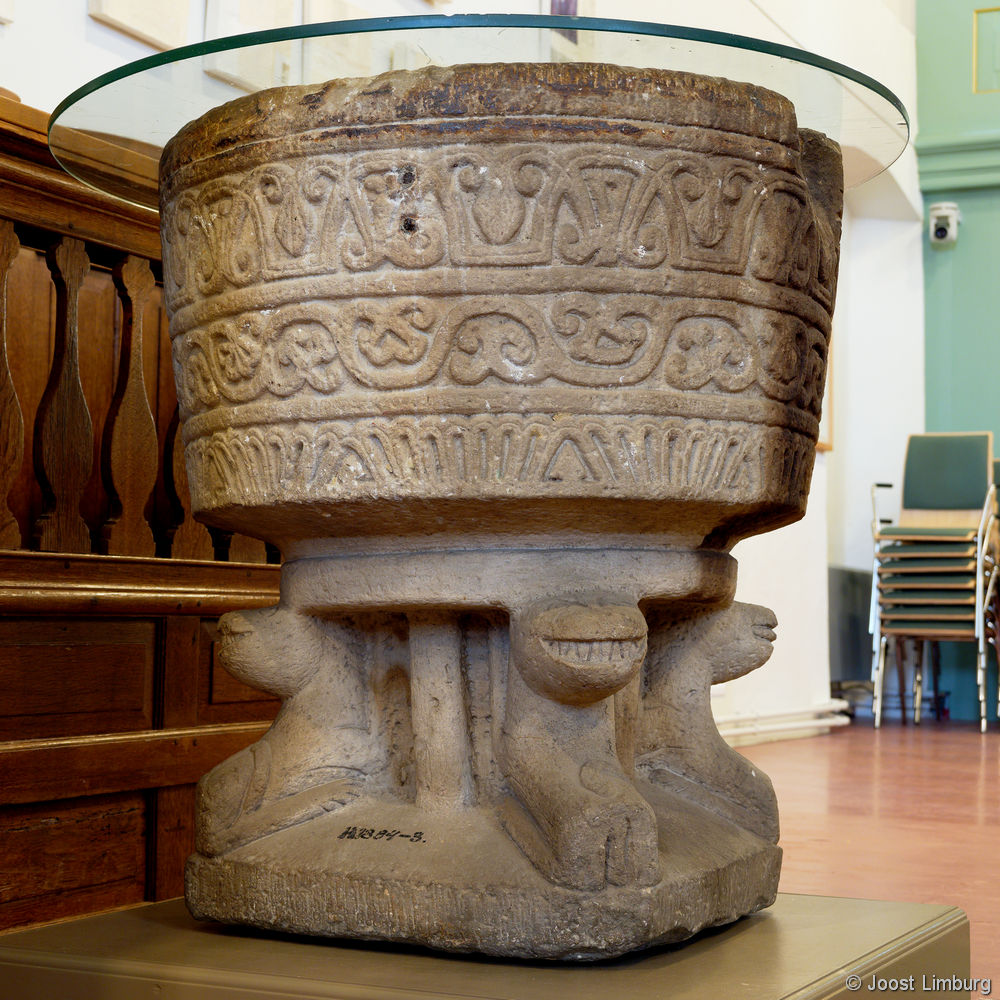
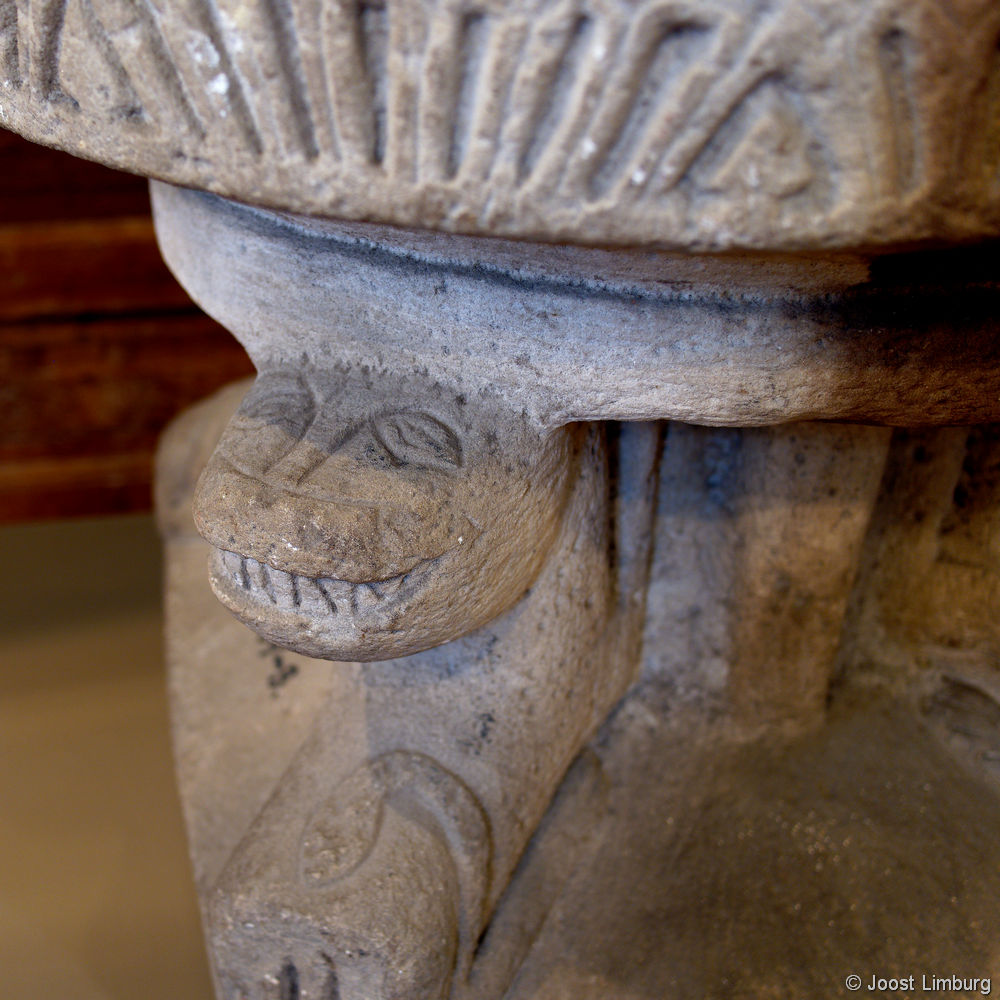
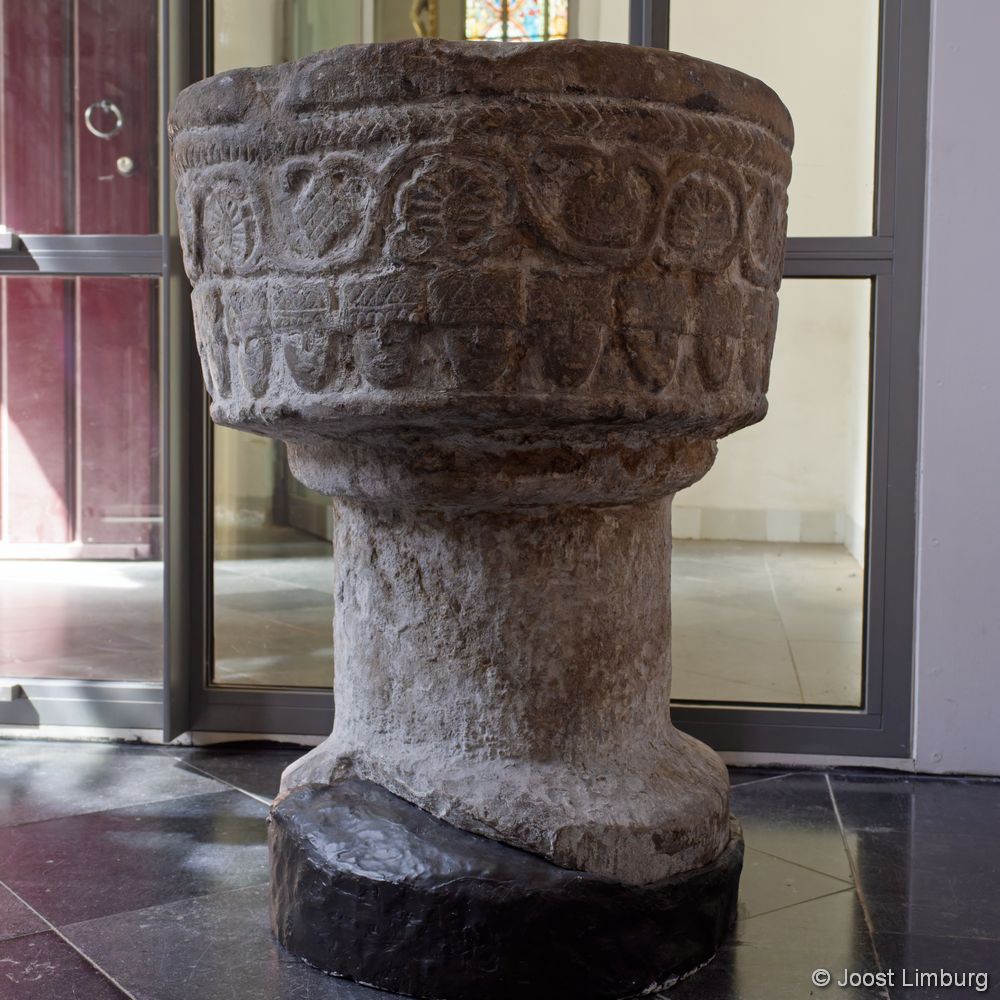
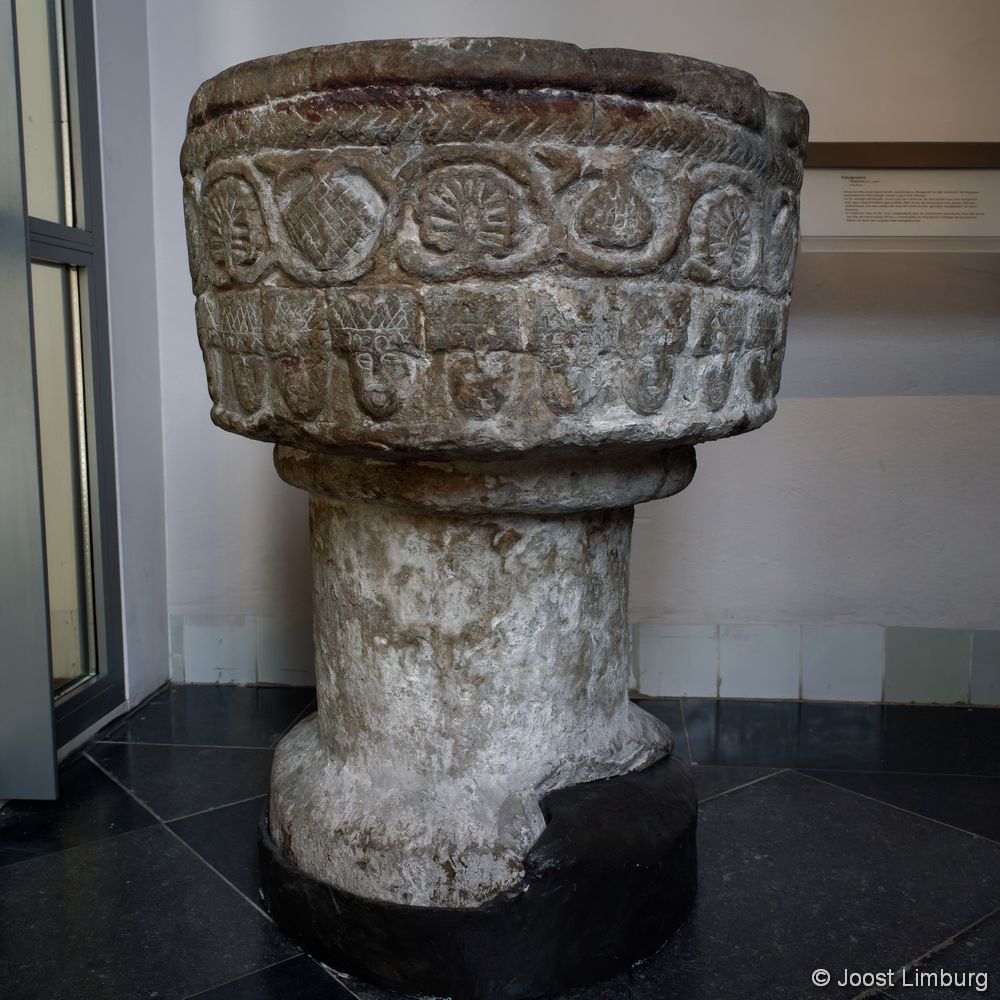
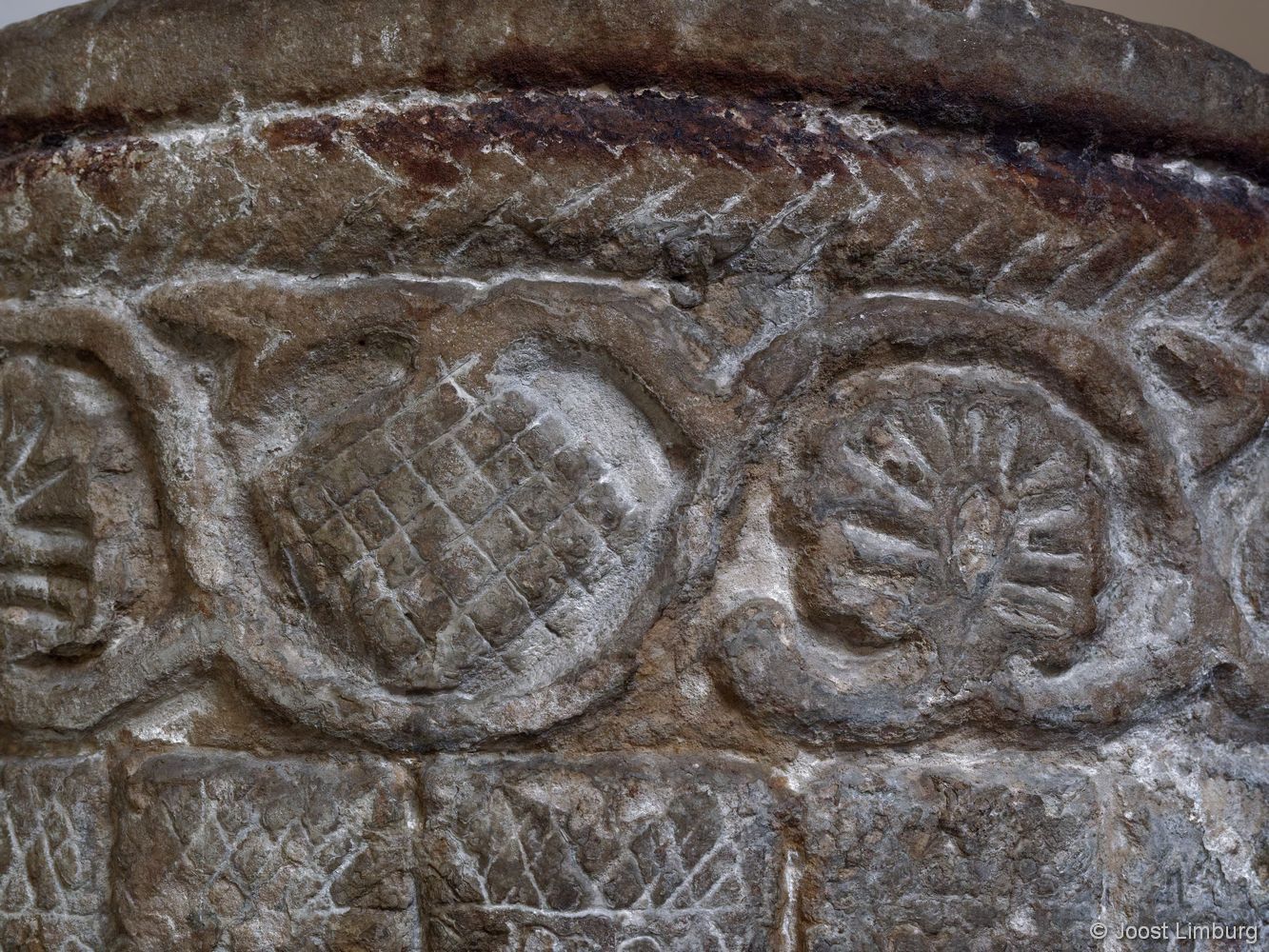
Alphen aan den Rijn (Zuid-Holland) – from Poortugaal
- Made: Probably between 1170 and 1220.
- Material: Stone from Dinant.
- Current location: Provinciaal Archeologisch Depot Zuid-Holland, Alphen aan den Rijn.
- Original church: Dorpskerk, Poortugaal. Built in the 13th century; rebuilt in later centuries.
- References:
- Notes:
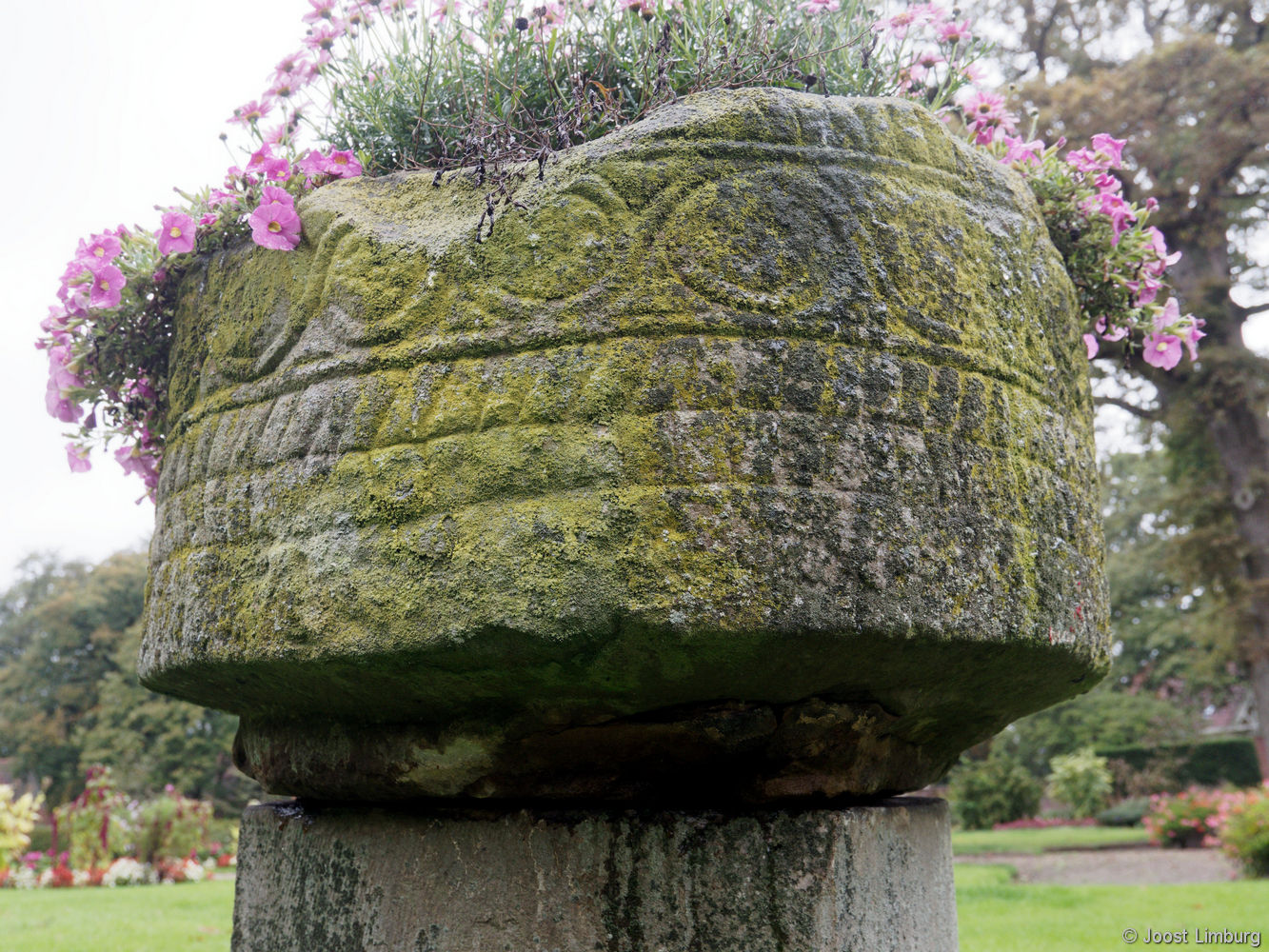
Amstenrade (Limburg)
- Made: Before 1250.
- Material: Stone from Namur.
- Current and original location: Onze-Lieve-Vrouw Onbevlekt Ontvangen Kerk, Amstenrade.
- Original church: Demolished and replaced in the mid 19th century.
- References:
- Ligtenberg, 1915
- Schönlank, 1999
- RCE photos [1] [2] [3] [4]
- Kerkgebouwen in Limburg
- Notes:
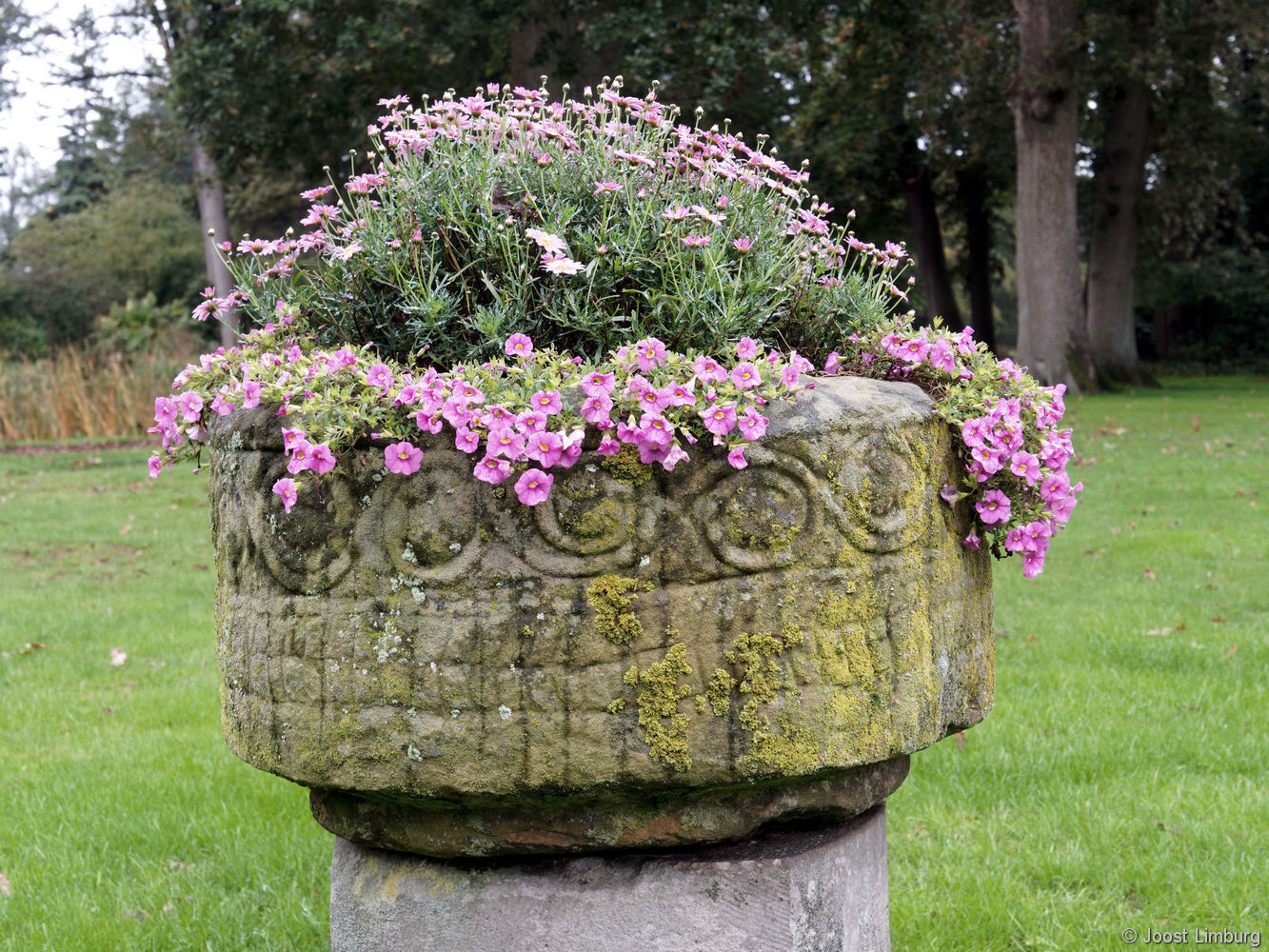
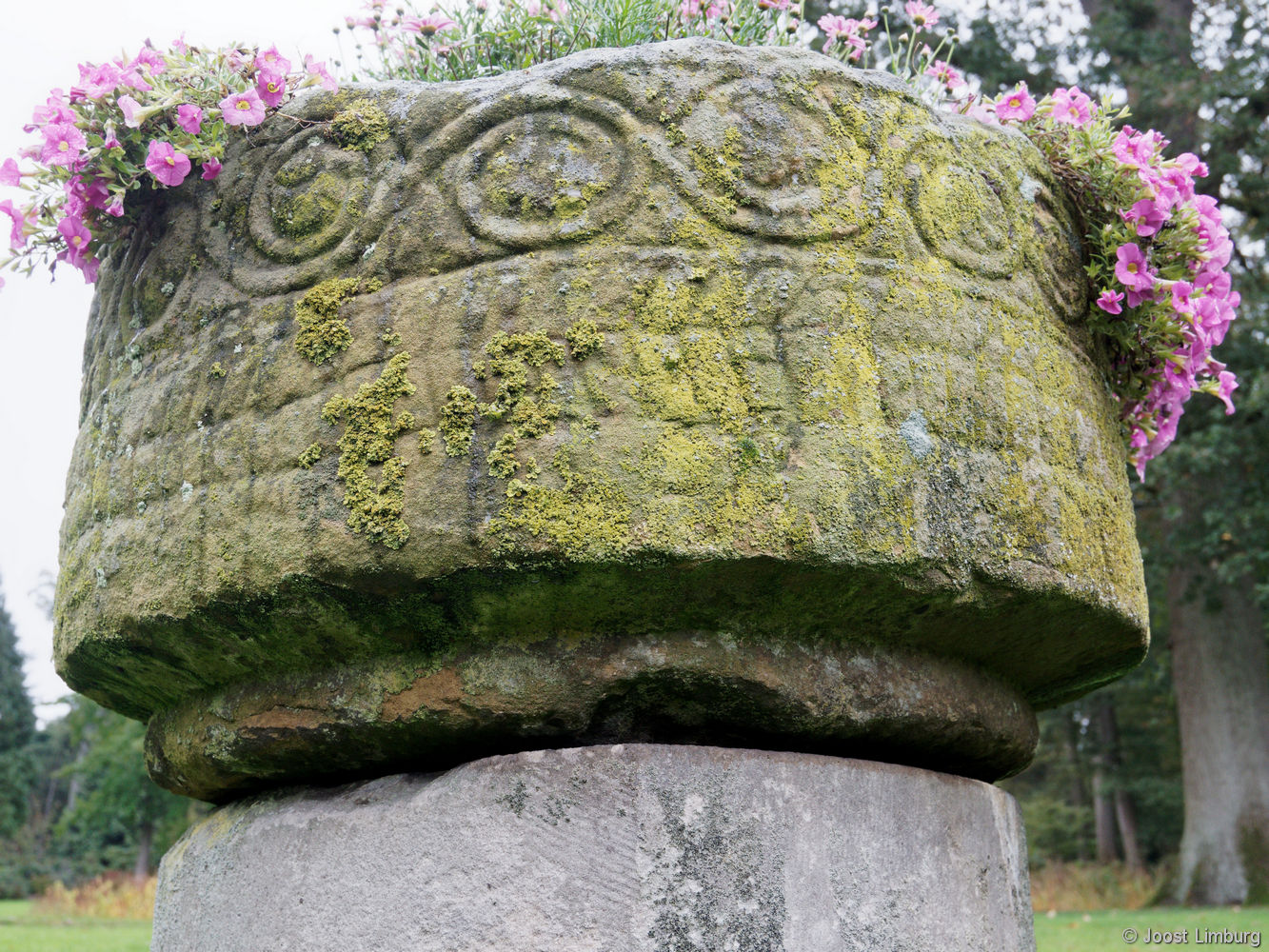
- Until at least the 1960s the font served as an ornamental flower box in the gardens of the nearby Amstenrade castle.
- The base is new.
Apeldoorn (Gelderland)
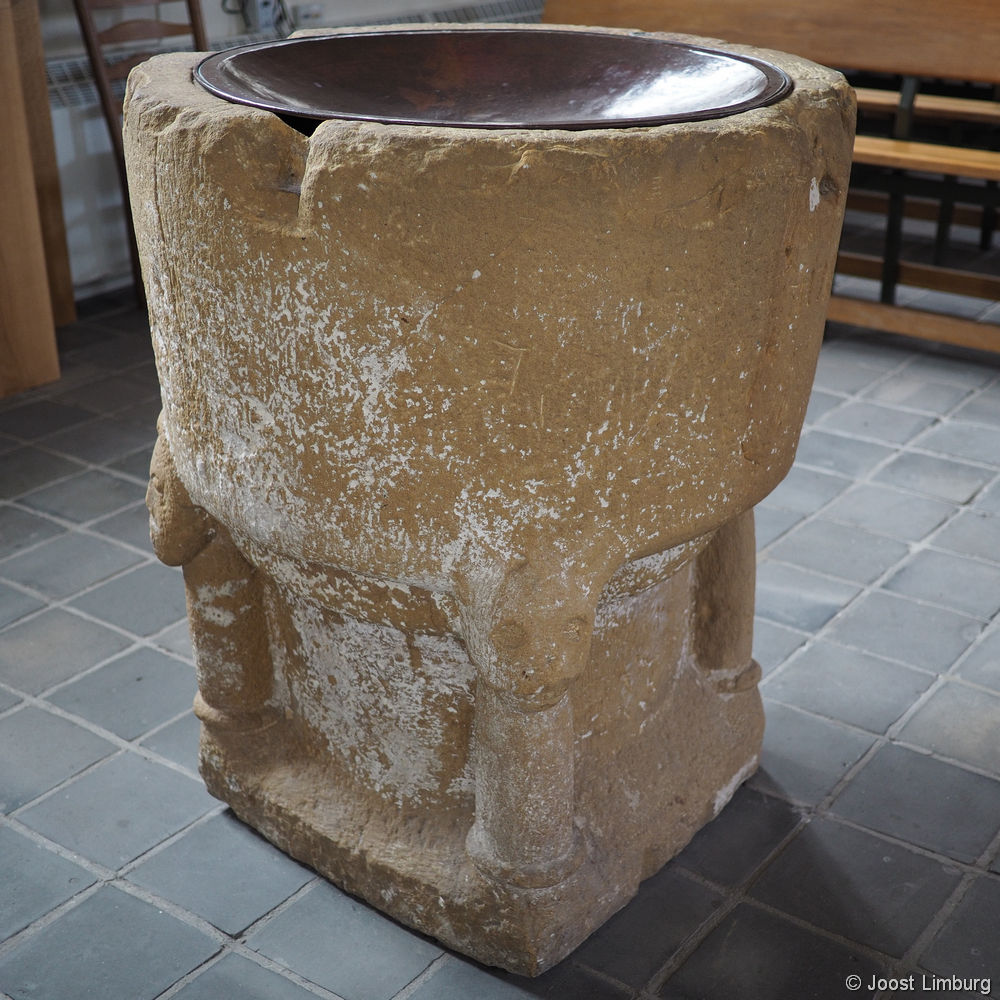
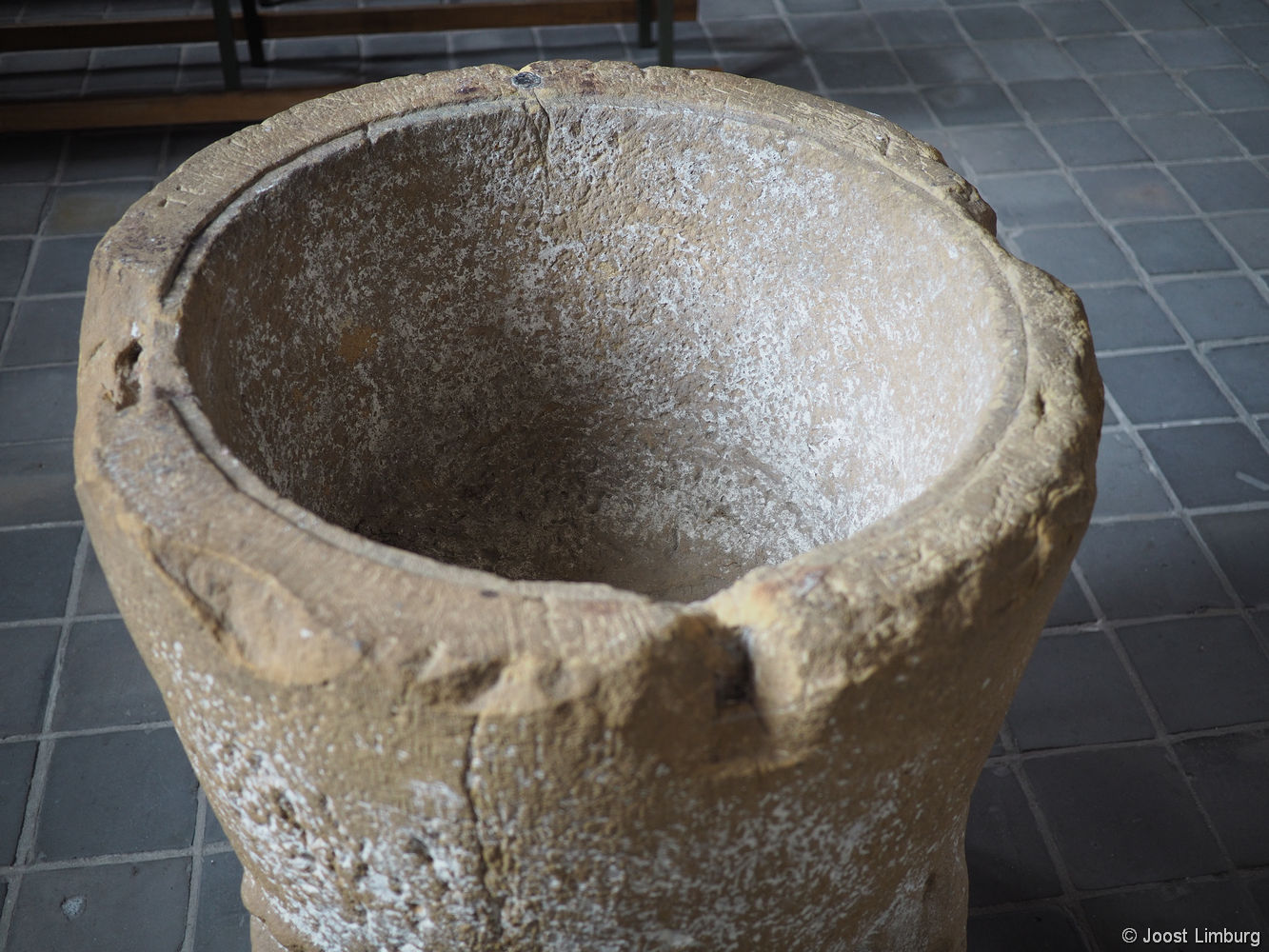
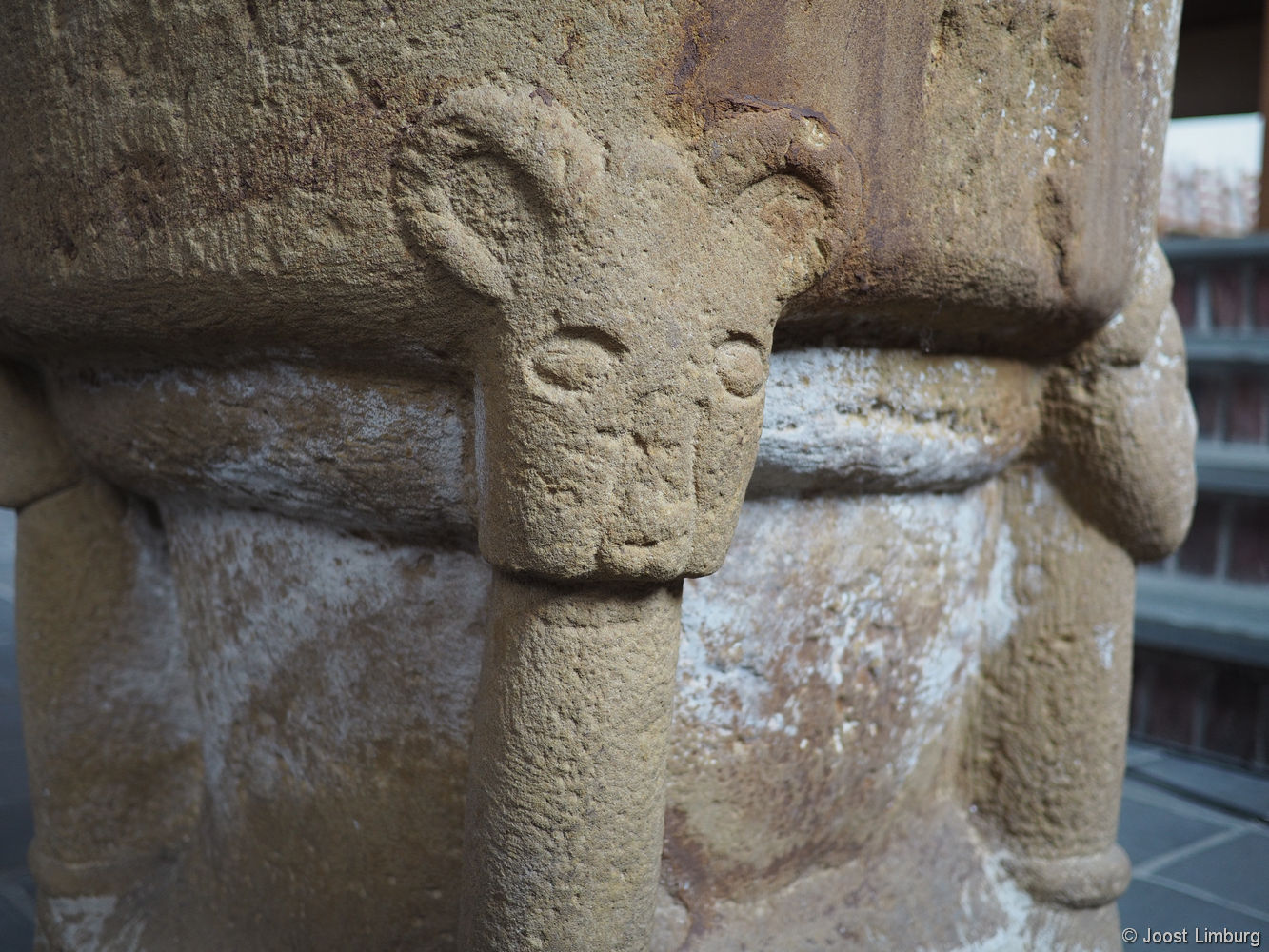
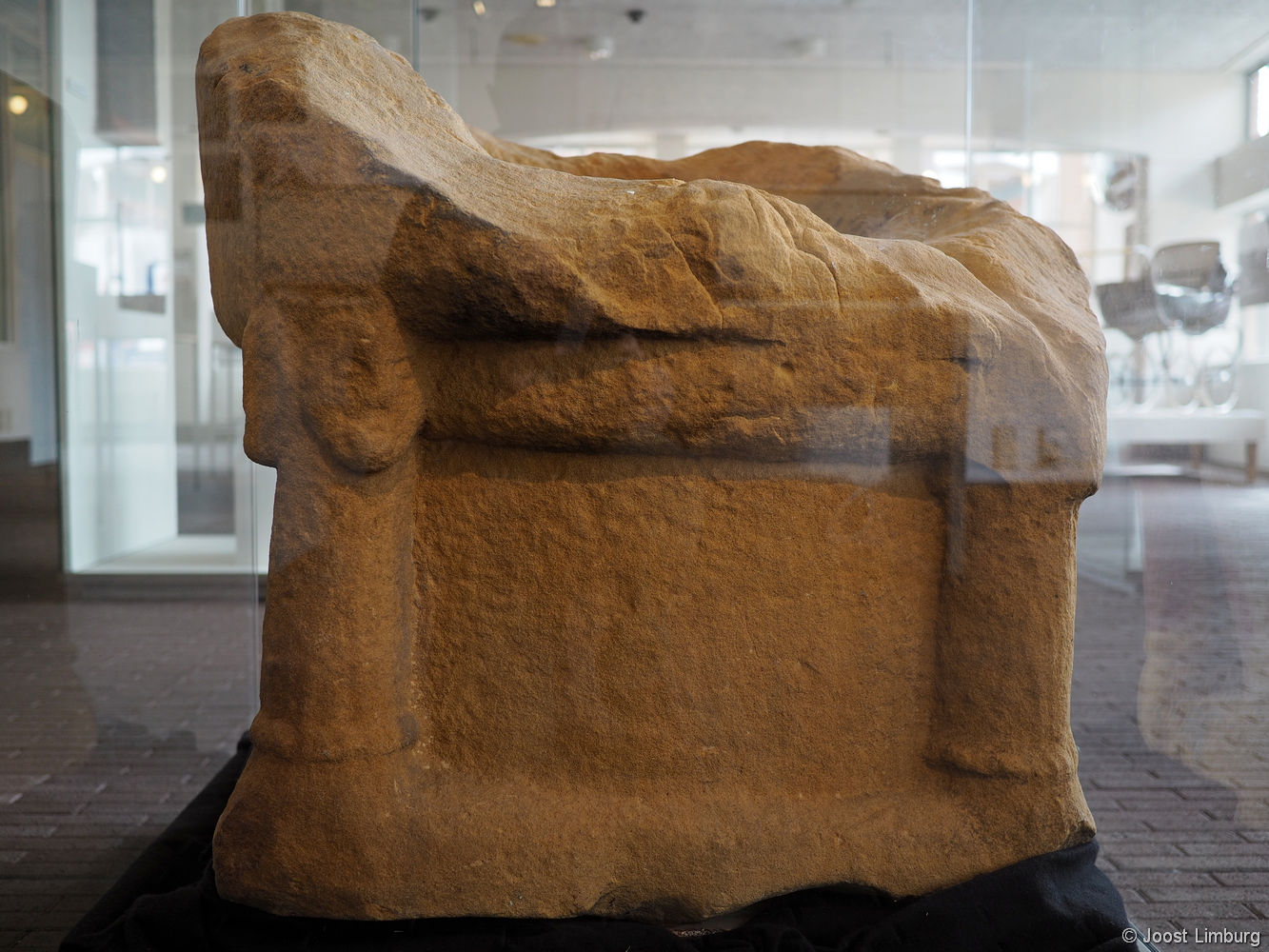
- Made: Mid 12th century.
>
- Material: Sandstone from Bentheim.
- Current location: CODA Museum - Public Library, Apeldoorn.
- Original church: Mariakerk, Apeldoorn. Demolished in the 16th century.
- References:
- Schönlank, 2001
- Drake, 2002
- Steensma, 2007
- Notes:
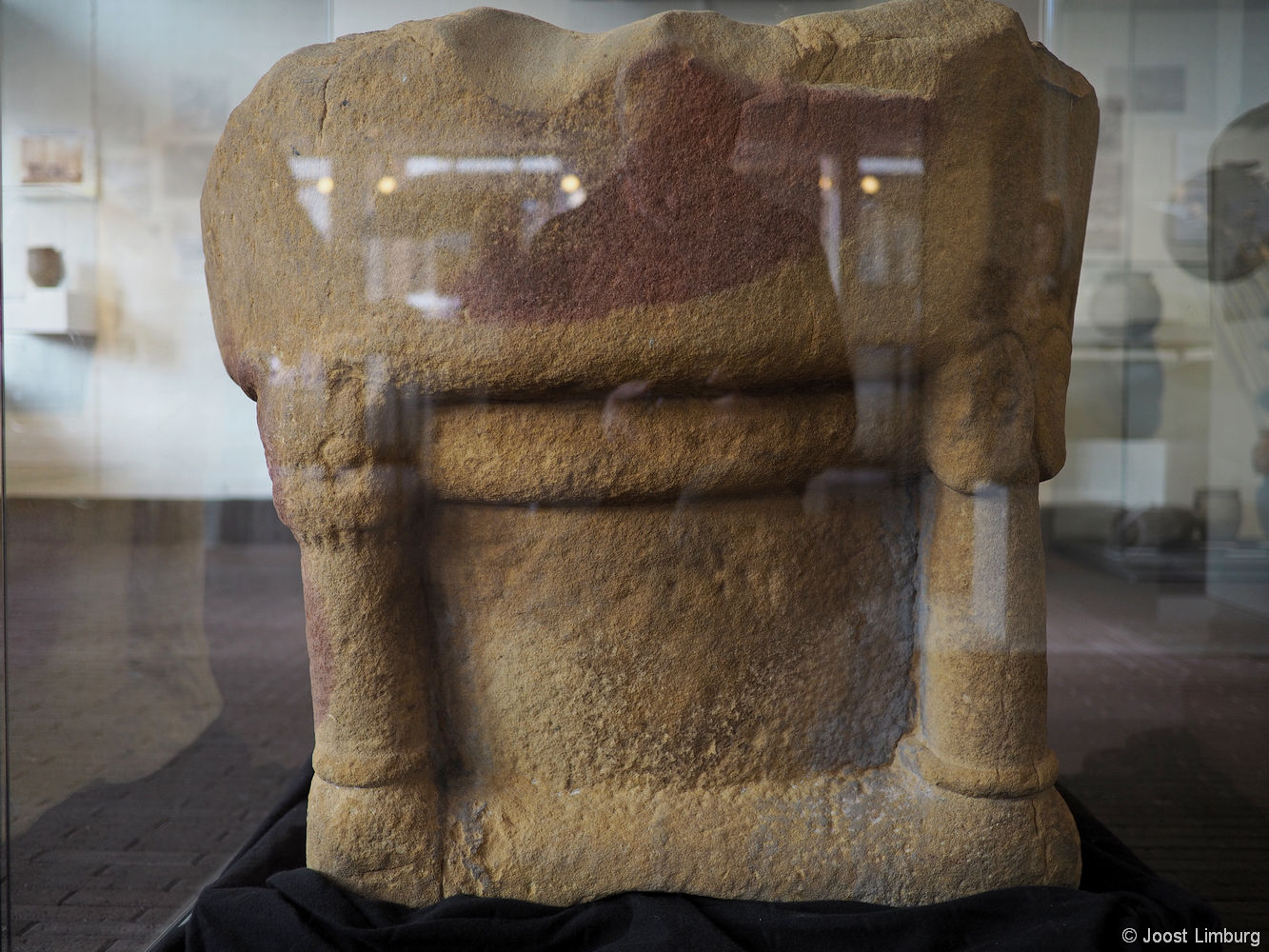
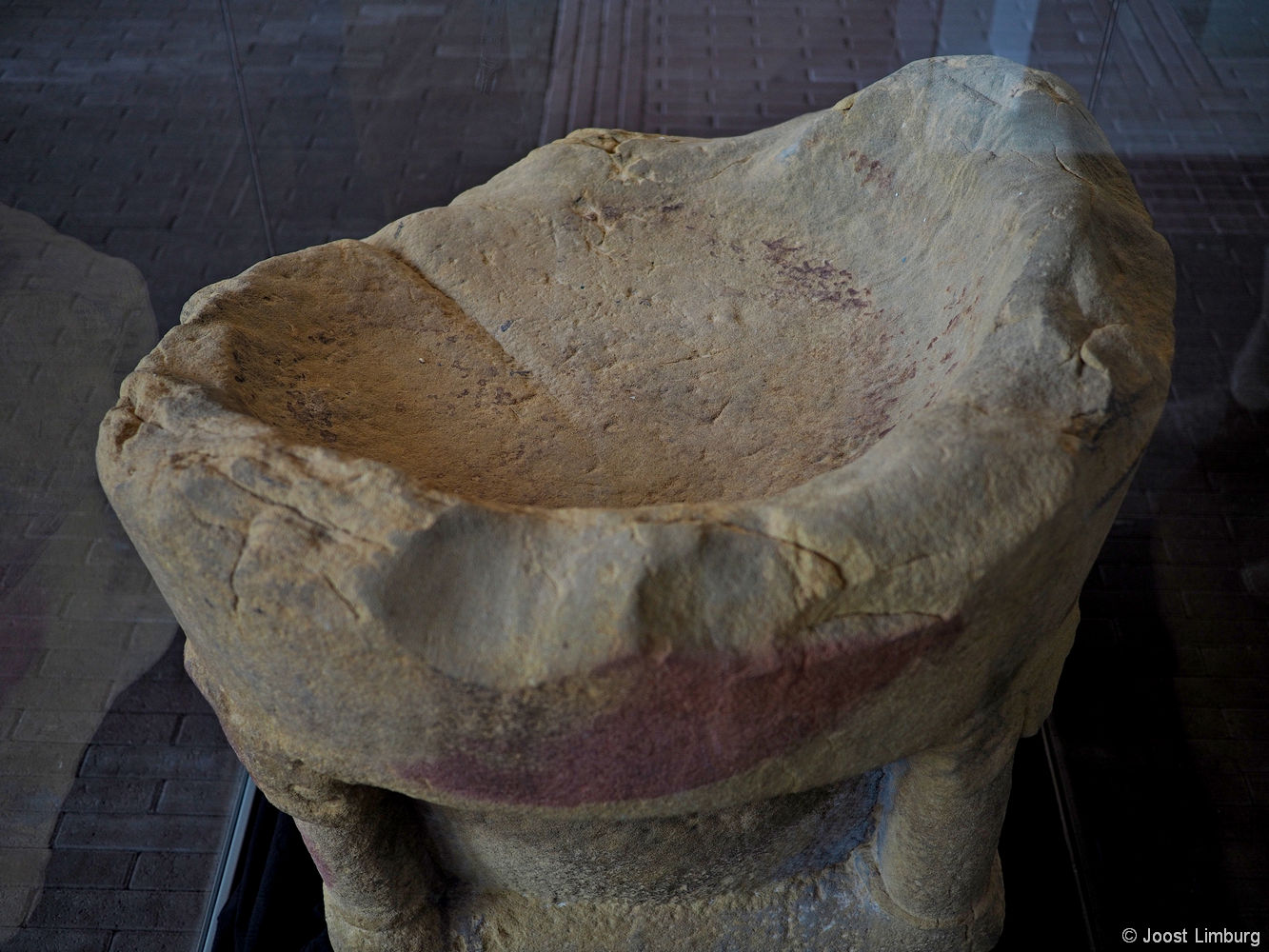
- After the Reformation the font was put outside, serving first as a cathedra for the sexton and later as a whetstone for stallholders in the marketplace.
Asselt (Limburg)
- Made: Second half 12th century.
- Material: Stone from Namur.
- Current location: Sint-Dionysiuskerk, Asselt.
- Original church: Martinuskerk, Tegelen (Limburg).
- References:
- Schönlank, 1999
- Drake, 2002
- Monumenten in Nederland, 2003
- RCE photo [1]
- Kerkgebouwen in Limburg
- Notes:
Batenburg (Gelderland)
- Made: Before 1250.
- Material: Stone from Namur.
- Current and original location: Sint-Victorkerk, Batenburg.
- Original church: Rebuilt in the 15th(?) century.
- References:
- Ligtenberg, 1915
- Romaans Nederland, 1994
- Monumenten in Nederland, 2000
- Schönlank, 2001
- RCE photos [1] [2]
- Notes:
- In July 1914 the illustrated magazine Prins der Geïllustreerde Bladen wrote that some time before the font had been found buried under the pavement near the church.
- According to Ligtenberg only the basin is original.
Beekbergen (Gelderland)
- Made: Around 1200.
- Material: Sandstone from Bentheim.
- Current and original location: Hervormde kerk, Beekbergen.
- Original church: Replaced in the 15th century.
- References:
- Eyck tot Zuilichem, 1846
- Panken, 1898
- Ligtenberg, 1915
- Schönlank, 2001
- Steensma, 2007
-
- Notes:
Bierum (Groningen) – from Toornwerd
- Made: Between 1220 and 1270.
- Material: Sandstone from Bentheim.
- Current location: Sebastiaankerk, Bierum.
- Original church: ...kerk, Toornwerd (Groningen). Demolished in the 18th century.
- References:
- Ligtenberg, 1915
- Monumenten in Nederland, 1998
- Drake, 2002
- Steensma, 2007
- RCE photo [1]
- Notes:
- The font was brought to the Groninger Museum in 1893. In 1966 it was moved to Bierum.
Bingelrade (Limburg)
- Made: Second half 12th - early 13th century.
- Material: Stone from Namur.
- Current (and original?) location: Lambertuskerk, Bingelrade.
- Original church: Unknown. The present church dates from 1935, replacing one from 1788.
- References:
- Notes:
- Fragment; part of the basin.
Breust (Limburg)
- Made: Before 1250.
- Material: Stone from Namur.
- Current and original location: St. Martinuskerk, Breust (Eijsden).
- Original church: Demolished/replaced in the late 14th century.
- References:
- Ligtenberg, 1915
- Schönlank, 1999
- Drake, 2002
- Monumenten in Nederland, 2003
- RCE photo [1]
- Notes:
- Only the foot is original.
Broekhuizenvorst (Limburg)
- Made: Before 1250.
- Material: Stone from Namur.
- Current and original location: H. Naam Jezuskerk (originally H. Verlosserkerk), Broekhuizenvorst.
- Original church: Replaced in several stages.
- References:
- Ligtenberg, 1915
- Schönlank, 1999
- Drake, 2002
- Monumenten in Nederland, 2003
- RCE photo [1]
- Notes:
- Only the basin is original.
Brummen (Gelderland)
- Made: 13th century.
- Material: Sandstone from Bentheim.
- Current location: Pancratiuskerk, Brummen.
- Original church: Unknown, the present church dates from the early 15th century.
- References:
- Ortt van Schonauwen, 1858
- Ligtenberg, 1915
- Schönlank, 2001
- Drake, 2002
- Steensma, 2007
- Notes:
- Fragment of basin and base, found on an estate near Vorden and Ruurlo around 1848.
Deursen (Brabant)
- Made: 12th - 13th century.
- Material: Stone from Namur.
- Current location: Unknown.
- Original location: Unknown; around 1872 it stood in the Vincentiuskerk, Deursen.
- References:
- Hermans, 1855
- Panken, 1898
- Geschiedenis van het Bisdom ’s Hertogenbosch, Derde deel, 1872
- Notes:
- In 1890 the font was sold to a private person from Nijmegen. There it was possibly lost during WWII.
Dordrecht (Zuid-Holland)
- Made: Unknown (12th - 13th century).
- Material: Sandstone.
- Current location: Augustijnenkerk, Dordrecht.
- Original location: Unknown, possibly a village that disappeared in the Elisabeth Flooding in 1421.
- References:
- Notes:
- During WWII the font was moved from a private property to the gardens of the Dordrechts Museum. In 2008 it was placed in the Augustijnenkerk.
Eenrum (Groningen)
- Made: 12th century.
- Material: Tuff or basalt.
- Current and original location: Laurentiuskerk, Eenrum.
- Original church: Built in the 12th century, extended and rebuilt in later centuries.
- References:
- Ortt van Schonauwen, 1858
- Ligtenberg, 1915
- Romaans Nederland, 1994
- Monumenten in Nederland, 1998
- Steensma, 2007
- Notes:
- The font was kept in the church tower till 1841. The next 50 years it served as a lime mortar tub and then it was taken to the Groninger Museum. In 1966 it was returned to the church.
Eibergen (Gelderland)
- Made: Around 1250.
- Material: Baumberger sandstone.
- Current and original location: Oude Mattheüskerk, Eibergen.
- Original church: Built in the 13th century, rebuilt/replaced around 1500.
- References:
- Monumenten in Nederland, 2000
- Schönlank, 2001
- Drake, 2002
- Notes:
- The damaged font was found under the church floor during restoration works in the early 1970s. Its restoration was carried out by De Deventer Steenhouwerij.
Elsloo (Limburg)
- Made: Before 1250.
- Material: Stone from Namur.
- Current location: St. Augustinuskerk, Elsloo.
- Original church: Replaced in the 15th century.
- References:
- Schönlank, 1999
- Monumenten in Nederland, 2003
- Kerkgebouwen in Limburg
- Notes:
Emmen (Drenthe)
- Made: Between 1200 and 1240.
- Material: Sandstone from Bentheim.
- Current and original location: Pancratiuskerk aka Grote Kerk, Emmen.
- Original church: Built in the 13th century; only the tower remains.
- References:
- Ligtenberg, 1915
- Romaans Nederland, 1994
- Monumenten in Nederland, 2001
- Drake, 2002
- Steensma, 2007
- Notes:
- The font is said to have served as an ornamental flower box in a private property in the nearby village of Nieuw Amsterdam. It was given to the Drents Museum in Assen some time in the late 19th century. In 1988 it was returned to the church.
Enschede (Overijssel)
- Made: Between 1150 and 1200.
- Material: Sandstone from Bentheim.
- Current and original location: Grote Kerk, Enschede.
- Original church: Built in the 13th century; the tower and part of the N wall of the nave remain.
- References:
- Ligtenberg, 1915
- Ter Kuile, 1934
- Romaans Nederland, 1994
- Monumenten in Nederland, 1998
- Drake, 2002
- Steensma, 2007
- RCE photos [1] [2]
- Notes:
Enschede (Overijssel) – from Hellendoorn
- Made: Between 1240 and 1270.
- Material: Sandstone from Bentheim.
- Current location: Rijksmuseum Twenthe.
- Original location: probably Hellendoorn (Overijssel).
- References:
- Ter Kuile, 1974
- Schönlank, 1997
- Drake, 2002
- Steensma, 2007
- Notes:
- In 1927 the font was found in a horse stable in Daarle (municipality of Hellendoorn), where it was being used as a trough. It was then sold to the museum.
Ermelo (Gelderland) (font and stoup)
- Made: Between 1150 and 1200.
- Material: Sandstone from Bentheim.
- Current and original location: Oude Kerk, Ermelo.
- Original church: Built in the 12th century; only the tower and part of the chancel remain.
- References:
- Eyck tot Zuilichem, 1846
- Panken, 1898
- Ligtenberg, 1915
- Monumenten in Nederland, 2000
- Schönlank, 2001
- Drake, 2002
- Steensma, 2007
- RCE photos [1] [2] [3] [4]
- Notes:
- The stoup is said to have served for a long time as a cathedra for the sexton. The upper part of its basin, including the double cable moulding, is new.
Eys (Limburg)
- Made: 12th - 13th century(?).
- Material: Stone from Namur.
- Current location: H. Agathakerk, Eys.
- Original location: A church in the same village, dating from 12th century and demolished in 1745.
- References:
- Voorlopige lijst der Nederlandsche Monumenten, 1926
- Notes:
- Only the basin is original, the base probably dates from the 18th century.
Groede (Zeeland) – from Nieuwerkerke
- Made: Second half 12th century.
- Material: Stone from Doornik.
- Current location: Grote Kerk, Groede.
- Original location: The church of the disappeared village of Nieuwerkerke (Zeeland).
- References:
- Notes:
- Fragment of the basin. It was found in 2010, near the original location.
Groenlo (Gelderland)
- Made: Between 1220 and 1270.
- Material: Sandstone from Bentheim.
- Current and original location: Oude Calixtuskerk, Groenlo.
- Original church: Rebuilt/replaced in the 16th century.
- References:
- Ligtenberg, 1915
- Ter Kuile, 1958
- Monumenten in Nederland, 2000
- Schönlank, 2001
- Drake, 2002
- Steensma, 2007
- RCE photo [1]
- Notes:
- For many years the font stood in the Rijksmuseum in Amsterdam. In the early 1950s it was returned to the church.
Groningen (Groningen) – from Dorkwerd
- Made: Between 1200 and 1240.
- Material: Sandstone from Bentheim.
- Current location: Groninger Museum, Groningen.
- Original location: Dorkwerd (Groningen).
- Original church: Unknown, the present church in Dorkwerd dates from 1648.
- References:
- Ligtenberg, 1915
Drake, 2002
- Steensma, 2007
- Notes:
- Only the basin. Currently in storage.
Guttecoven (Limburg)
- Made: Second half 12th century.
- Material: Stone from Namur.
- Current (and original?) location: Nicolaaskerk, Guttecoven.
- Original church: Unknown, the oldest reference to the church dates from 1336.
- References:
- Schönlank, 1999
- Monumenten in Nederland, 2003
- Kerkgebouwen in Limburg
- Notes:
Haaksbergen (Overijssel)
- Made: Probably between 1220 and 1270.
- Material: Sandstone from Bentheim.
- Current location: Protestantse Kerk, Haaksbergen.
- Original church: Sint-Pancratiuskerk, Haaksbergen; built in the 12th century, extended and rebuilt in later centuries.
- References:
- Drake, 2002
- Steensma, 2007
- Notes:
- In 1963 the font, of which only the base remains, was found buried in the garden of the presbytery. In 2009 it was placed in the Protestantse Kerk.
Hattem (Gelderland)
- Made: Between 1220 and 1270.
- Material: Sandstone from Bentheim.
- Current and original location: Andreaskerk, Hattem.
- Original church: Built around 1225; only the lower part of the tower remains. The rest dates from the early 15th century.
- References:
- Eyck tot Zuilichem, 1846
- Panken, 1898
- Ligtenberg, 1915
- Monumenten in Nederland, 2000
- Schönlank, 2001
- Drake, 2002
- Steensma, 2007
- RCE photo [1]
- Notes:
- After the Reformation the font was put outside, serving as an ornamental flower box in a local park. In 1891 it was placed back in the church.
Heel (Limburg)
- Made: Second half 12th century.
- Material: Stone from Namur.
- Current and original location: Stephanuskerk, Heel.
- Original church: Built in the 12th century; only the tower remains.
- References:
- Ligtenberg, 1915
- Romaans Nederland, 1994
- Schönlank, 1999
- Drake, 2002
- Monumenten in Nederland, 2003
- ?Ghislain, 2009
- Notes:
Heemse (Overijssel)
- Made: Between 1220 and 1270.
- Material: Sandstone from Bentheim.
- Current and original location: Sint-Lambertuskerk, Heemse.
- Original church: Built in the 13th century(?).
- References:
- Ortt van Schonauwen, 1858
- Ligtenberg, 1915
- Ter Kuile, 1974
- Monumenten in Nederland, 1998
- Drake, 2002
- Steensma, 2007
- RCE photos [1] [2]
- Notes:
- After the Reformation the font served for many years as an ornamental flower box in the vicar’s garden. In 1936 it was put back in the church.
’s-Heerenberg (Gelderland) – from Otterlo
- Made: Between 1150 and 1200.
- Material: Sandstone from Bentheim.
- Current location: Huis Bergh, ’s-Heerenberg.
- Original location: Otterlo (Gelderland).
- References:
- Schönlank, 2001
- Drake, 2002
- Steensma, 2007
- RCE photos [1] [2]
- Notes:
- The font was bought in 1916 by J.H. van Heek, who had acquired the Huis Bergh castle four years earlier.
Heeswijk (Brabant) – from Vessem
- Made: Between 1170 and 1220.
- Material: Stone from Namur.
- Current location: Kasteel Heeswijk, Heeswijk.
- Original church: Lambertuskerk, Vessem (Brabant)
- References:
- Panken, 1898
- RCE photos [1] [2]
- Notes:
- In 1882 the font was sold to baron André van de Bogaerde, who had acquired the Heeswijk castle in 1834.
Hengelo (Overijssel)
- Made: Unknown.
- Material: Sandstone?
- Current location: Waterstaatskerk, Hengelo.
- Original location: Unknown, perhaps the chapel at Huis Hengelo?
- References:
- Notes:
- The font was found in the parish garden in 1905. Romanesque? Originally a stoup?
Herpen (Brabant)
- Made: Before 1220.
- Material: Stone from Namur.
- Current and original location: Sebastianuskerk, Herpen.
- Original church: Built in the 12th or 13th century, rebuilt/replaced in later centuries.
- References:
- Hermans, 1855
- Panken, 1898
- Ligtenberg, 1915
- Romaans Nederland, 1994
- Monumenten in Nederland, 1997
- Drake, 2002
- Notes:
- The basin is the only original part. The font was rediscovered, hidden behind a pile of rubbish in the church tower, in 1848.
Horssen (Gelderland)
- Made: Between 1170 and 1220.
- Material: Stone from Namur.
- Current location: H. Antonius Abt Kerk, Horssen.
- Original church: Unknown (perhaps the former R.K. Kerk in the same village?).
- References:
- Ligtenberg, 1915
- Schönlank, 2001
- Drake, 2002
- RCE photos [1] [2]
- Notes:
- The basin is the only original part.
- A fragment of another font from this village (RCE photo [3]) is kept in the Valkhof Museum in Nijmegen.
Horst (Limburg)
- Made: Before 1250.
- Material: Stone from Namur.
- Current and original location: Sint-Lambertuskerk, Horst.
- Original church: Built in the 12th or 13th century, rebuilt/replaced in later centuries.
- References:
- Ligtenberg, 1915
- Romaans Nederland, 1994
- Schönlank, 1999
- Drake, 2002
- Monumenten in Nederland, 2003
- RCE photos [1] [2]
- Notes:
- The basin is the only original part.
Ingen (Gelderland)
- Made: 12th century or older?
- Material: Baumberger sandstone.
- Current and original location: Lambertuskerk, Ingen.
- Original church: Built in the 12th or 13th century; a small part of the tuff E wall of the nave remains.
- References:
- Monumenten in Nederland, 2000
- Schönlank, 2001
- RCE photos [1] [2]
- Notes:
Kantens (Groningen)
- Made: Between 1200 and 1240.
- Material: Sandstone from Bentheim.
- Current and original location: Antonius- aka Vituskerk, Kantens.
- Original church: Built in the 12th - 13th century; mostly intact.
- References:
- Ligtenberg, 1915
- Drake, 2002
- Steensma, 2007
- RCE photo [1]
- Notes:
- The font served as an ornamental flower box for a long time; probably the base was “restyled” for this purpose. In the early 20th century the font was brought to the Groninger Museum. In 2006 it was returned to the church.
Klimmen (Limburg)
- Made: Before 1250.
- Material: Stone from Namur.
- Current and original location: Remigiuskerk, Klimmen.
- Original church: Built in the 12th century, the nave remains.
- References:
- Ligtenberg, 1915
-
- Schönlank, 1999
- Notes:
- Only the base is original, the basin is said to date from the 17th century.
Leeuwarden (Friesland) – from Jellum
- Made: Between 1220 and 1270.
- Material: Sandstone from Bentheim.
- Current location: Frysk Museum, Leeuwarden.
- Original location: Jellum (Friesland).
- Original church: Unknown; the oldest known church, destroyed in 1983, dated from around 1700.
- References:
- Ligtenberg, 1915
- Monumenten in Nederland, 2000
- Drake, 2002
- Steensma, 2007
- Notes:
Leur (Gelderland)
- Made: 13th century.
- Material: Stone from Namur.
- Current and original location: Mariakerk, Leur.
- Original church: Built in the 13th century; only the lower part of the tower remains.
- References:
- Ligtenberg, 1915
- Monumenten in Nederland, 2000
- Schönlank, 2001
- RCE photo [1]
- Notes:
Limbricht (Limburg)
- Made: Second half 12th century.
- Material: Stone from Namur.
- Current location: Nieuwe Salviuskerk, Limbricht.
- Original church: Oude Salviuskerk?
- References:
- Notes:
- Only the base? Romanesque?
Limmel (Limburg)
- Made: Before 1250.
- Material: Stone from Namur.
- Current (and original?) location: Johannes de Doperkerk, Limmel (Maastricht).
- Original church: Unknown, the present church dates from the 19th century.
- References:
- Ligtenberg, 1915
- Romaans Nederland, 1994
- Schönlank, 1999
- Drake, 2002
- Monumenten in Nederland, 2003
- RCE photo [1]
- Kerkgebouwen in Limburg
- Notes:
Linne (Limburg)
- Made: Before 1250.
- Material: Stone from Namur.
- Current (and original?) location: Sint-Martinuskerk, Linne.
- Original church: Unknown, the present church dates from the late 19th century.
- References:
- Ligtenberg, 1915
- Romaans Nederland, 1994
- Schönlank, 1999
- Monumenten in Nederland, 2003
- RCE photos [1] [2]
- Kerkgebouwen in Limburg
- Notes:
Lottum (Limburg)
- Made: Between 1170 and 1220.
- Material: Stone from Namur.
- Current (and original?) location: Sint-Gertrudiskerk, Lottum.
- Original church: Unknown. The present church was built in the 1950s after its predecessor, which dated from the 15th century, was destroyed in WWII.
- References:
- Ligtenberg, 1915
- Schönlank, 1999
- Drake, 2002
- RCE photo [1]
- Kerkgebouwen in Limburg
- Notes:
- Only the basin is original.
Maastricht (Limburg) – from Nieuwstadt
- Made: 13th century.
- Material: Stone from Namur.
- Current location: Bonnefantenmuseum, Maastricht.
- Original location: Johannes de Doperkerk(?), Nieuwstadt (Limburg).
- References:
- Ligtenberg, 1915
- Schönlank, 1999
- Notes:
- Fragment; part of the basin.
Maastricht (Limburg)
- Made: 12th - 13th century.
- Material: Stone from Namur.
- Current location: Sint-Servatiusbasiliek, Maastricht.
- Original church: Built in the 11th century, a large part of the nave remains.
- References:
- Notes:
- Fragment; part of the basin, on display in the adjoining Schatkamer Museum.
Meeden (Groningen)
- Made: Between 1230 and 1250.
- Material: Sandstone from Bentheim.
- Current (and original?) location: Hervormde Kerk, Meeden.
- Original church: Disappeared; the present one dates from the 15th century.
- References:
- Groninger Kerken, 10/2017
- Notes:
- The font was found buried under the church floor during restoration works in 2013.
Molenberg (Limburg)
- Made: Last quarter 12th century.
- Material: Stone from Namur.
- Current location: Verschijning van de Onbevlekte Maagdkerk, Molenberg.
- Original location: Vijlen(?) (Limburg).
- References:
- Voorlopige lijst der Nederlandsche Monumenten, 1926
- Kerkgebouwen in Limburg
- Notes:
- Only the basin is original.
Noordeloos (Zuid-Holland)
- Made: Late 12th century.
- Material: Stone from Namur.
- Current and original location: Bonifatiuskerk, Noordeloos.
- Original church: Built in the 13th century; only the lower part of the tower remains.
- References:
- Schönlank, 1999
- Monumenten in Nederland, 2004
- RCE photos [1] [2] [3]
- Notes:
- Only the basin is original.
Norg (Drenthe) (font and stoup)
- Made: Between 1150 and 1200 (stoup), between 1220 and 1270 (font).
- Material: Sandstone from Bentheim.
- Current and original location: Margarethakerk, Norg.
- Original church: Built in the 13th century, replacing an older wooden church; mostly intact.
- References:
- Ligtenberg, 1915
- Romaans Nederland, 1994
- Monumenten in Nederland, 2001
- Drake, 2002
- Steensma, 2007
- Notes:
- The font and the stoup were sold to the Drents Museum in 1891. In 1988 they were returned to the church.
Nuis (Groningen)
- Made: Between 1220 and 1270.
- Material: Sandstone from Bentheim.
- Current location: Noordelijk Archeologisch Depot (NAD), Nuis.
- Original location: Unknown, perhaps Dalen (Drenthe).
- References:
- Notes:
- Fragment of the lower part of the basin.
- According to the NAD it was found in a farmyard near Dalen. Steensma refers to a fragment from Westerbork, this may be the same object.
Nuth (Limburg)
- Made: Before 1250.
- Material: Stone from Namur.
- Current and original location: Sint-Bavokerk, Nuth.
- Original church: Built in the 13th century, replaced in the 18th.
- References:
- Ligtenberg, 1915
- Schönlank, 1999
- Monumenten in Nederland, 2003
- Kerkgebouwen in Limburg
- Notes:
Oirsbeek (Limburg)
- Made: 13th century(?).
- Material: Stone from Namur.
- Current location: Unknown.
- Original church: Lambertuskerk, Oirsbeek. Built 13th century; rebuilt several times.
- References:
- Ligtenberg, 1915
- Voorlopige lijst der Nederlandsche Monumenten, 1926
- Schönlank, 1999
- Notes:
- The font is said to have disappeared during or shortly after the restoration of the church in the 1950s.
Olst (Overijssel)
- Made: 13th century.
- Material: Sandstone from Bentheim.
- Current and original location: Hervormde Kerk, Olst.
- Original church: Built (early) 13th century; the tuff lower part of the tower remains.
- References:
- Ter Kuile, 1964
- Schönlank, 1997
- Monumenten in Nederland, 2001
- Drake, 2002
- Steensma, 2007
- RCE photo [1]
- Notes:
- The font is said to have served as a cathedra for the sexton next to the church.
Ommen (Overijssel) (stoup)
- Made: Between 1150 and 1200.
- Material: Sandstone from Bentheim.
- Current and original location: Brigittakerk, Ommen.
- Original church: Built in the 13th century, rebuilt/replaced in later centuries.
- References:
- Ligtenberg, 1915
- Ter Kuile, 1974
- Romaans Nederland, 1994
- Monumenten in Nederland, 1998
- Drake, 2002
- Steensma, 2007
- Notes:
- From 1903 the stoup stood in the Rijksmuseum in Amsterdam. In 1979(?) it was returned to the church.
Oud-Valkenburg (Limburg)
- Made: 11th century(?).
- Material: Stone from Namur.
- Current and original location: Johannes de Doperkerk, Oud-Valkenburg.
- Original church: Built in the 11th century; part of the walls of the nave remain.
- References:
- Schönlank, 1999
- RCE photo [1]
- Kerkgebouwen in Limburg
- Notes:
Peize (Drenthe)
- Made: Between 1200 and 1240.
- Material: Sandstone from Bentheim.
- Current and original location: Hervormde Kerk, Peize.
- Original church: Built in the 13th century; part of the nave remains.
- References:
- Ligtenberg, 1915
- Romaans Nederland, 1994
- Monumenten in Nederland, 2001
- Drake, 2002
- Steensma, 2007
- Notes:
- In 1883 the font was bought by the Drents Museum; in 1988 it was returned to the church.
Rijssen (Overijssel)
- Made: Between 1200 and 1240.
- Material: Sandstone from Bentheim.
- Current and original location: Grote Kerk aka Schildkerk, Rijssen.
- Original church: Built in the 12th century; the tuff N wall of the nave remains.'/li>
- References:
- Romaans Nederland, 1994
- Monumenten in Nederland, 1998
- Drake, 2002
- Steensma, 2007
- RCE photo [1]
- Notes:
Roden (Drenthe)
- Made: Between 1220 and 1270.
- Material: Sandstone from Bentheim.
- Current and original location: Catharinakerk, Roden.
- Original church: Built in the 13th century; part of the nave remains.
- References:
- Ligtenberg, 1915
- Monumenten in Nederland, 2001
- Drake, 2002
- Steensma, 2007
- RCE photos [1] [2]
- Notes:
- For many years the font stood in the Drents Museum, before it was returned to the church.
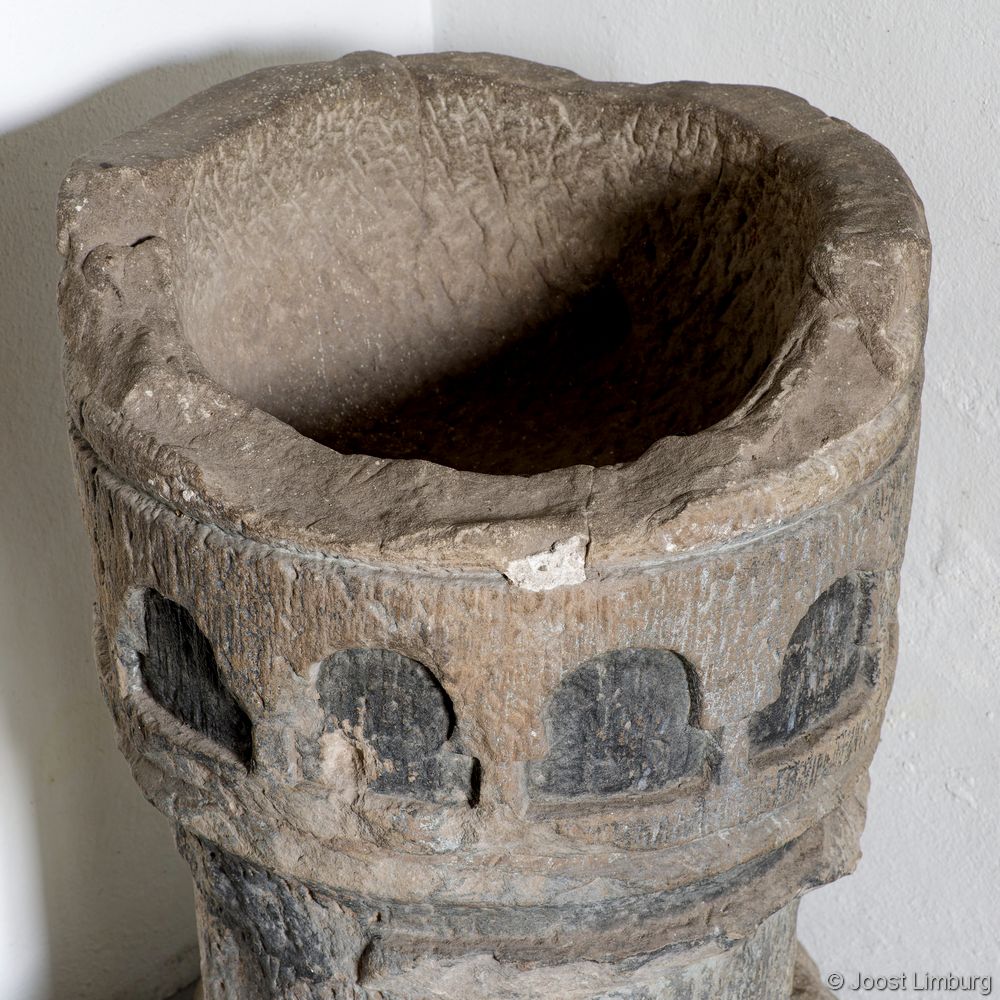
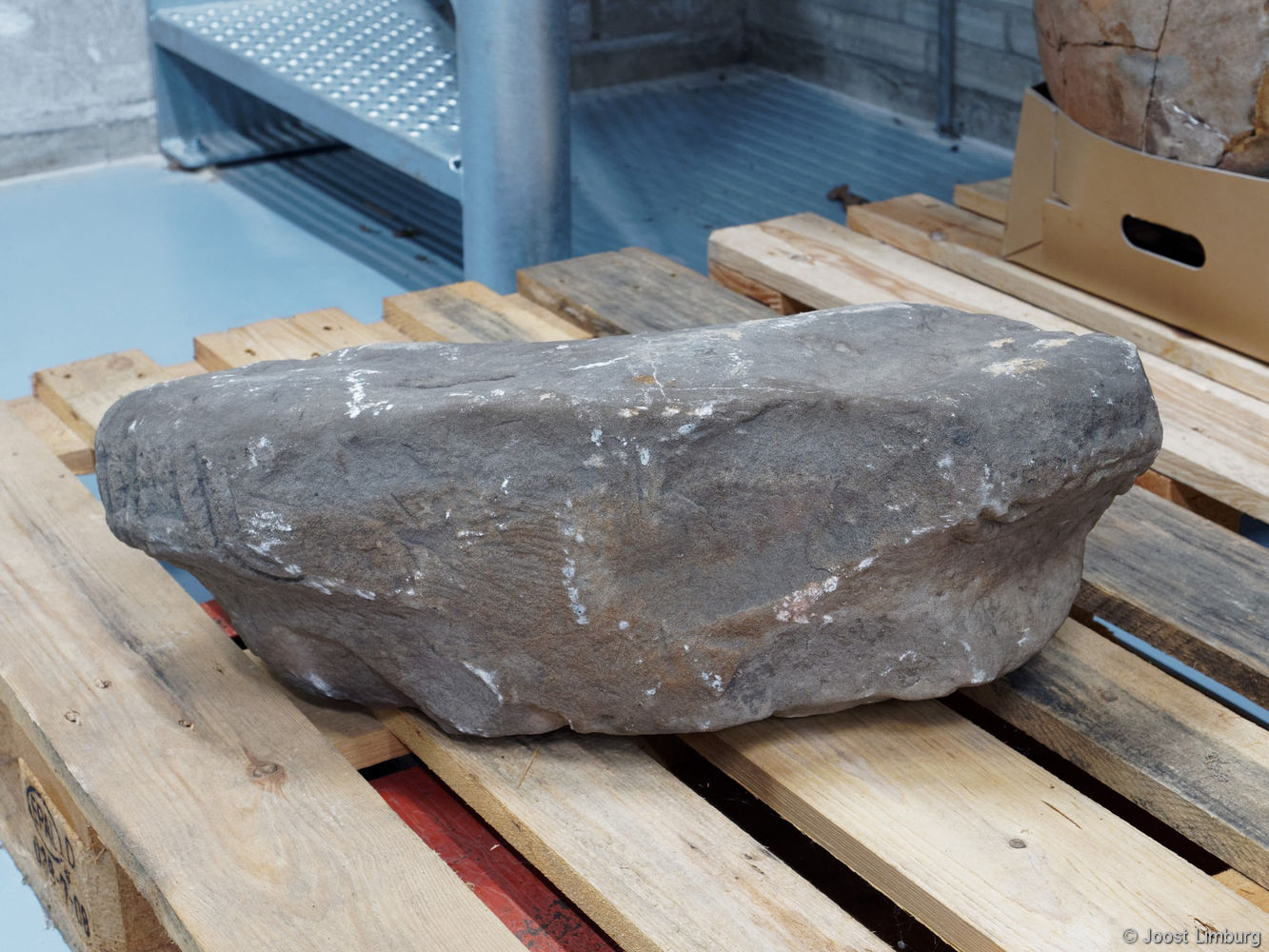
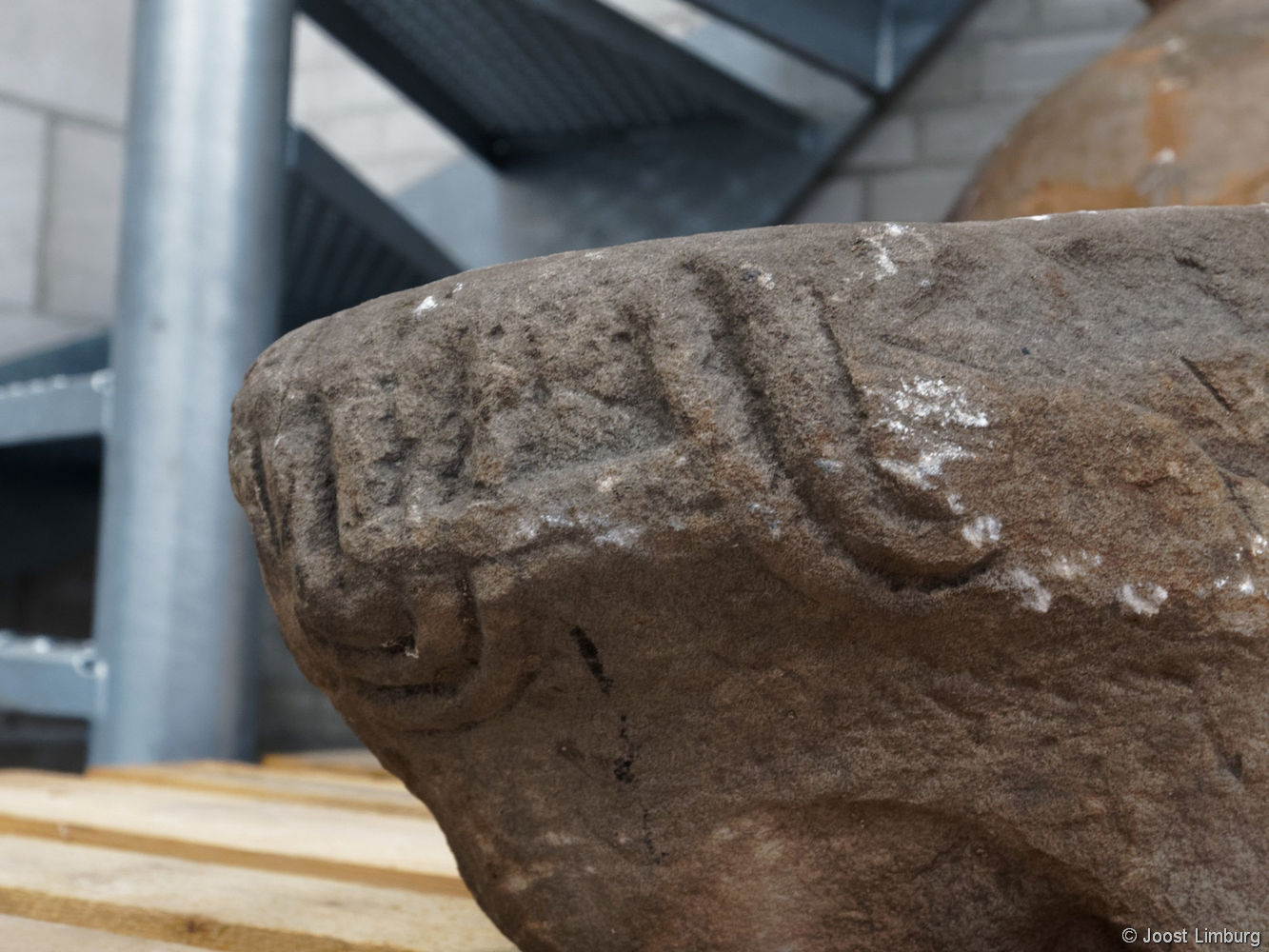
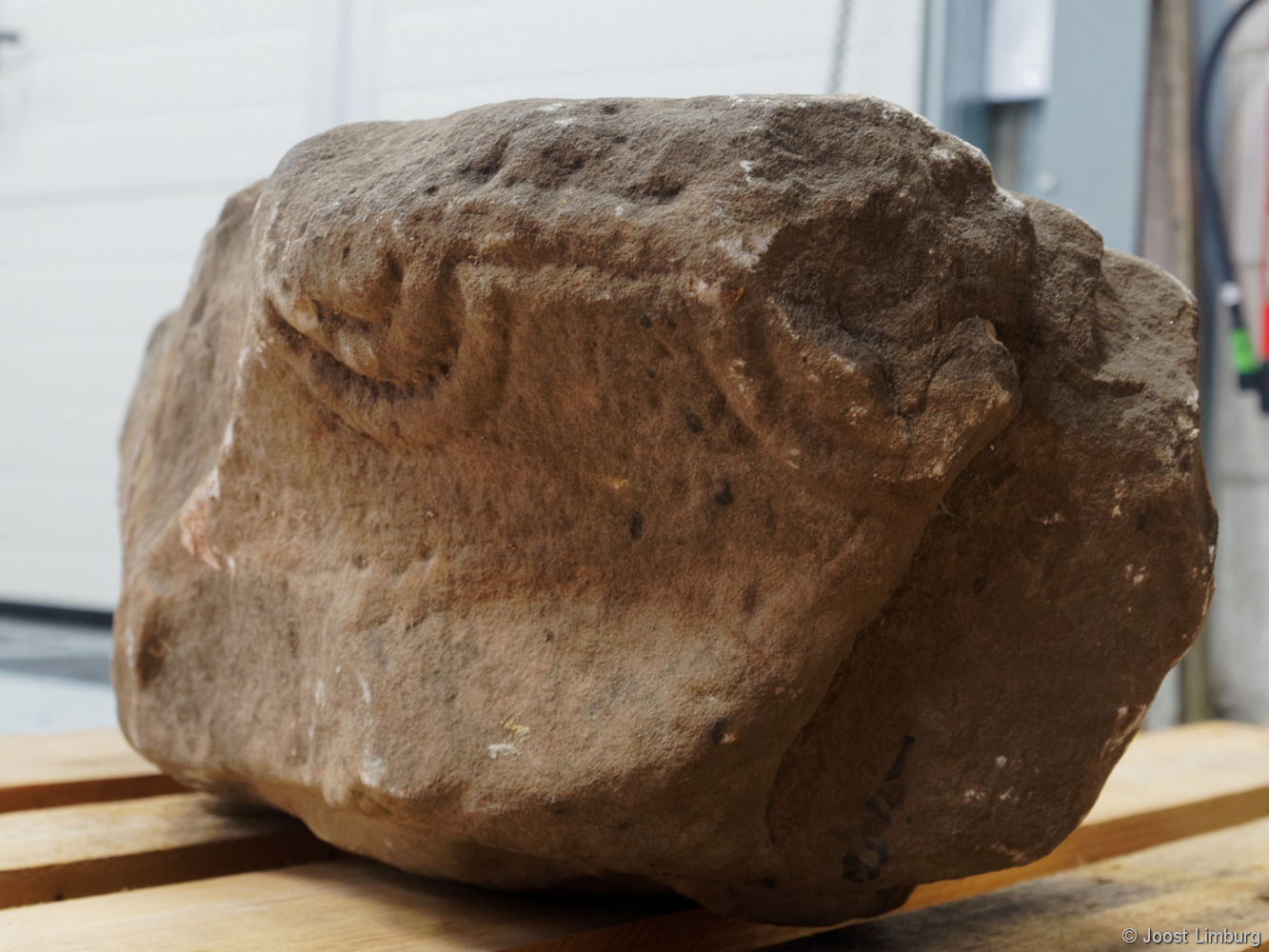
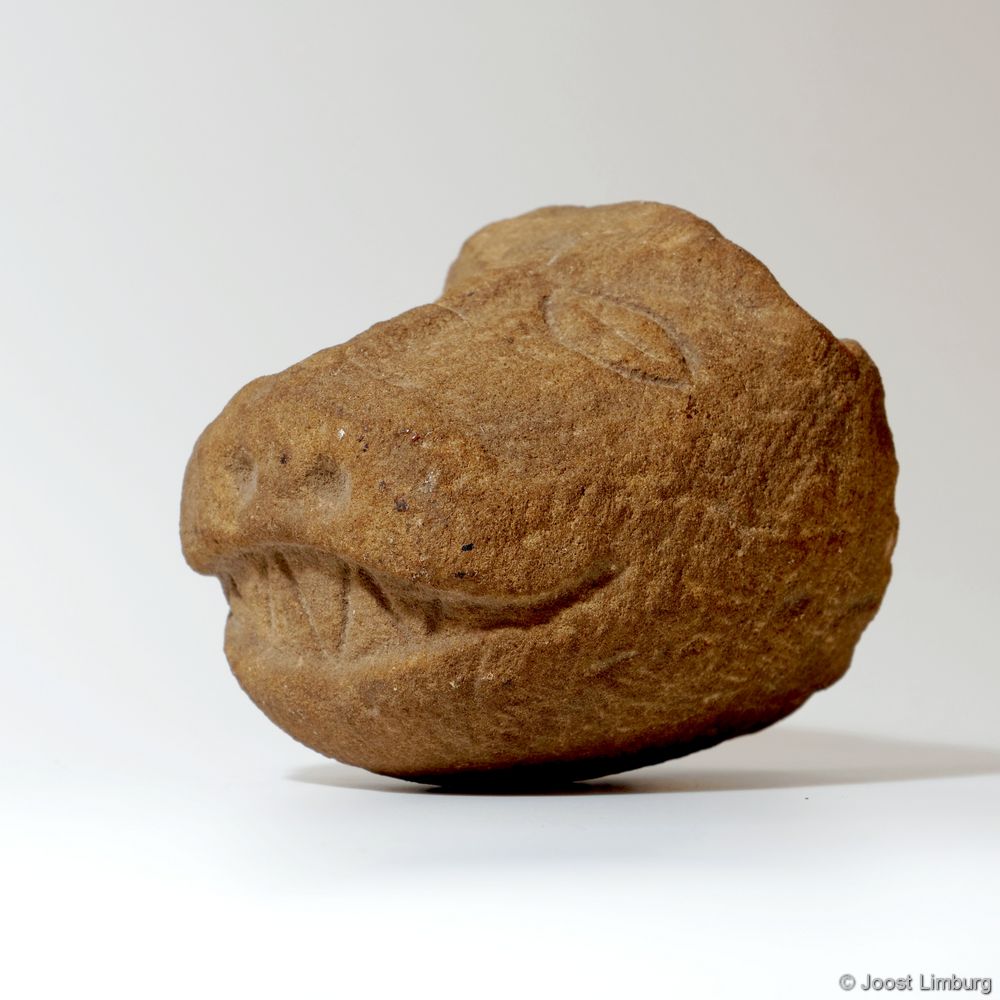
- The head of one of the lions is kept in the NAD in Nuis (Groningen).
Roosteren (Limburg)
- Made: Late 12th century.
- Material: Stone from Namur.
- Current and original location: Jacobuskerk, Roosteren.
- Original church: Built in the 12th or 13th century; demolished around 1840.
- References:
- Monumenten in Nederland, 2003
- Kerkgebouwen in Limburg
- Notes:
Schinnen (Limburg)
- Made: Before 1250.
- Material: Stone from Namur.
- Current and location: Dionysiuskerk, Schinnen.
- Original church: Built in the 12th century; the nave and the lower part of the tower remain.
- References:
- Ligtenberg, 1915
- Schönlank, 1999
- Monumenten in Nederland, 2003
- Kerkgebouwen in Limburg
- Notes:
Sint Odiliënberg (Limburg)
- Made: Before 1250.
- Material: Stone from Namur.
- Current and original location: O.L. Vrouwekapel, Sint Odiliënberg.
- Original church: Built in the 11th century, followed by several additions and restorations.
- References:
- Ligtenberg, 1915
- Schönlank, 1999
- ?Drake, 2002
- Monumenten in Nederland, 2003
- Kerkgebouwen in Limburg
- Notes:
Sleen (Drenthe)
- Made: Between 1200 and 1240.
- Material: Sandstone from Bentheim.
- Current (and original?) location: Hervormde Kerk, Sleen.
- Original church: Unknown, the present church dates from the 14th - 15th century.
- References:
- Ligtenberg, 1915
- Romaans Nederland, 1994
- Monumenten in Nederland, 2001
- Drake, 2002
- Steensma, 2007
- Notes:
- For many years the font served as an ornamental flower box in the garden of the vicarage. In 1888 it was sold to the Drents Museum, 100 years later it was returned to the church.
Stevensweert (Limburg)
- Made: Between 1170 and 1220.
- Material: Stone from Namur.
- Current and original location: Sint-Stephanuskerk, Stevensweert.
- Original church: Built in the 13th century, replaced in the 18th.
- References:
- Schönlank, 1999
- Monumenten in Nederland, 2003
- Kerkgebouwen in Limburg
- Notes:
Swolgen (Limburg)
- Made: Between 1170 and 1220.
- Material: Stone from Namur.
- Current and original location: Sint-Lambertuskerk, Swolgen.
- Original church: Built in the 13th century, extended around 1500, rebuilt after WWII.
- References:
- Ligtenberg, 1915
- Schönlank, 1999
- Drake, 2002
- Monumenten in Nederland, 2003
- RCE photo [1]
- Kerkgebouwen in Limburg
- Notes:
- Only the basin is original.
Tegelen (Limburg)
- Made: 13th century(?).
- Material: Stone from Namur.
- Current (and original?) location: Martinuskerk, Tegelen.
- Original church: Unknown, the oldest reference of the church dates from the 15th century.
- References:
- Schönlank, 1999
- Monumenten in Nederland, 2003
- RCE photo [1]
- Kerkgebouwen in Limburg
- Notes:
- Fragment; part of the basin.
Termunten (Groningen) – from Heveskes
- Made: Between 1150 and 1200.
- Material: Sandstone from Bentheim.
- Current location: Ursuskerk, Termunten.
- Original church: Andreas(?)kerk, Heveskes (Groningen), dating from the early 13th century.
- References:
- Monumenten in Nederland, 1998
- Steensma, 2007
- RCE photo [1]
- Notes:
- The font was dug up in 1890. It served as a trough and a whetstone until the 1950s, when it was placed in the church of Termunten.
Terwolde (Gelderland)
- Made: Around 1200.
- Material: Sandstone from Bentheim.
- Current (and original?) location: Hervormde Kerk, Terwolde.
- Original church: Unknown, the present church dates from the 14th - 15th century.
- References:
- Eyck tot Zuilichem, 1846
- Panken, 1898
- Ligtenberg, 1915
- Monumenten in Nederland, 2000
- Schönlank, 2001
- Steensma, 2007
- RCE photo [1]
- Notes:
Tiel (Gelderland)
- Made: Early(?) 13th century.
- Material: Stone from Namur.
- Current location: Sint Maartenskerk, Tiel.
- Original church: Possibly the Sint Walburgiskerk (Tiel), demolished in 1679.
- References:
- Notes:
- Fragment; one half of the basin.
Twekkelo (Overijssel)
- Made: First half 13th century.
- Material: Sandstone from Bentheim.
- Current location: Private property Het Stroot, Twekkelo (mun. Enschede).<.li>
- Original location: Somewhere in Twente or Westfalen.
- References:
- Notes:
- In the 1920s the font was bought from a farmer, probably in Twente or Westfalen, who was using it as a trough. The buyer, J.H. van Heek, then gave it to his brother, the owner of Het Stroot.
Utrecht (Utrecht) – from Winterswijk
- Made: Around 1260.
- Material: Sandstone from Bentheim.
- Current location: Museum Catharijneconvent, Utrecht
- Original location: Probably Jacobskerk, Winterswijk (Gelderland).
- References:
- Ligtenberg, 1915
- Schönlank, 2001
- Drake, 2002
- Steensma, 2007
- RCE photo [1]
- Notes:
Utrecht (Utrecht)
- Made: Second half 12th century
- Material: Stone from Namur.
- Current location: Pieterskerk, Utrecht.
- Original location: Unknown, probably the province of Limburg.
- References:
- Monumenten in Nederland, 1996
- Drake, 2002
- Notes:
- Only the basin is original, the base dates from the 1950s. The font was kept in the Bonnefantenmuseum in Maastricht before it was placed in the Pieterskerk.
Vaassen (Gelderland)
- Made: 13th century.
- Material: Stone from Bentheim.
- Current location: Unknown; disappeared between 1846 and 1915.
- Original church: Dorpskerk, Vaassen(?); built in 1853 replacing a medieval church.
- References:
- Eyck tot Zuilichem, 1846
- Ligtenberg, 1915
- Schönlank, 1999
- Notes:
Vledder (Drenthe)
- Made: Third quarter 12th century.
- Material: Stone from Bentheim.
- Current (and original?) location: Hervormde Kerk, Vledder.
- Original church: Unknown, the present church dates from the 14th - 15th century.
- References:
- Ligtenberg, 1915
- Romaans Nederland, 1994
- Monumenten in Nederland, 2001
- Drake, 2002
- Steensma, 2007
- Notes:
For many years the font stood in the Drents Museum, before it was returned to the church.
Voerendaal (Limburg)
- Made: Late 12th century.
- Material: Stone from Namur.
- Current and original location: Laurentiuskerk, Voerendaal.
- Original church: Built in the 11th - 12th century; only the tower remains.
- References:
- Ligtenberg, 1915
- Romaans Nederland, 1994
- Schönlank, 1999
- Drake, 2002
- RCE photos [1] [2]
- Kerkgebouwen in Limburg
- Notes:
Vries (Drenthe)
- Made: Between 1220 and 1270.
- Material: Sandstone from Bentheim.
- Current and original location: Sint-Bonifatiuskerk, Vries.
- Original church: Built second half 12th century; the tower and the nave remain. The chancel dates from around 1425.
- References:
- Ligtenberg, 1915
- Romaans Nederland, 1994
- Monumenten in Nederland, 2001
- Drake, 2002
- Steensma, 2007
- RCE photo [1]
- Notes:
- The font was sold to the Drents Museum in 1833. In 1952 it was placed back in the church.
- A plaster replica of this font, made in 1949, can be found in the church in Rolde (Drenthe).
Wanssum (Limburg)
- Made: Between 1170 and 1220.
- Material: Stone from Namur.
- Current (and original?) location: Sint-Michaelkerk, Wanssum.
- Original church: Unknown. The present church was built in the early 1950s; its oldest known predecessor dated from the 15th century.
- References:
- Ligtenberg, 1915
- Romaans Nederland, 1994
- Schönlank, 1999
- Drake, 2002
- RCE photo [1]
- Kerkgebouwen in Limburg
- Notes:
Waspik (Brabant)
- Made: Before 1250.
- Material: Stone from Namur.
- Current location: Hervormde Kerk, Waspik.
- Original church: Unknown, the church was lost in the Elisabeth Flooding in 1421.
- References:
- Notes:
- Fragment; almost half of the basin, found during the restoration in 1959.
Weerselo (Overijssel)
- Made: Between 1220 and 1270.
- Material: Sandstone from Bentheim.
- Current and original location: Hervormde Kerk, Het Stift (mun. Dinkelland).
- Original church: Built in the 12th century; part of the walls remain.
- References:
- Ligtenberg, 1915
- Romaans Nederland, 1994
- Monumenten in Nederland, 1998
- Drake, 2002
- Steensma, 2007
- RCE photos [1] [2]
- Notes:
- The village Het Stift belonged to the municipality of Weerselo till 2001.
Wesepe (Overijssel)
- Made: Probably first half 13th century.
- Material: Sandstone from Bentheim.
- Current and original(?) location: Nicolaaskerk, Wesepe.
- Original church: Unknown, the present church dates from the 14th century.
- References:
- Ter Kuile, 1964
- Monumenten in Nederland, 1998
- Steensma, 2007
- RCE photo [1]
- Notes:
- The font is said to have served for many years as a cathedra next to the church for the sexton. In 1950 it was placed back inside.
Woudenberg (Utrecht)
- Made: t.b.a.
- Material: Sandstone from Anröchte(?).
- Current location: Hervormde kerk, Woudenberg.
- Original church: Unknown, the present church dates from the 15th century.
- References:
- De Klapperman, published by Stichting Oud Woudenberg, 1983
- Notes:
- Fragments; the foot and one head.
Zutphen (Gelderland)
- Made: Between 1200 and 1240.
- Material: Sandstone from Bentheim.
- Current location: Stedelijk Museum, Zutphen.
- Original location: Unkown; possibly Borculo or Terborg.
- References:
- Ter Kuile, 1958
- Schönlank, 2001
- Steensma, 2007
- Notes:
- The font was put in the museum in 1967, after having served as an ornamental flower box in a notary’s garden in Borculo. The base is new.
Zweeloo (Drenthe)
- Made: Between 1220 and 1270.
- Material: Sandstone from Bentheim.
- Current location: Hervormde Kerk, Zweeloo.
- Original church: Built in the 13th century; the nave remains mostly intact .
- References:
- Ligtenberg, 1915
- Drake, 2002
- Steensma, 2007
- Notes:
- The font is said to have served for a long time as a trough and a whetstone. From the late 19th century it stood in the Drents Museum, being returned to the church in the 1980s.
Zwolle (Overijssel)
- Made: Between 1220 and 1270.
- Material: Sandstone from Bentheim.
- Current location: Stedelijk Museum, Zwolle.
- Original location: Unknown.
- References:
- Notes:
- The font was found near the Lemelerberg by the end of the 19th century, and ended up in the possession of a doctor from Bilthoven, who in later years moved to Zwolle. He donated the font to the Museum in 1937.
- For the time being the font is lent to the Sandsteinmuseum in Bad Bentheim, Germany.
Rather Gothic
The following baptismal fonts should be dated from the late 13th century or later and be considered (early) Gothic rather than Romanesque:
- Haelen (Limburg), Lambertuskerk; currently in the Cuypershuis Museum
- Middelbeers (Brabant), Sint-Willibrorduskerk
- Montfort (Limburg), Catharinakerk
- Schin op Geul (Limburg), Mauritiuskerk
- Sevenum (Limburg), Fabianus en Sebastianuskerk
- Sint-Oedenrode (Brabant), Sint-Martinuskerk
- Susteren (Limburg), Amelbergakerk
Resources
Books, articles and academic papers
- Ada van DEIJK & al.:
Romaans Nederland, Architectura & Natura Pers / Zodiaque, 1994
- C.S. DRAKE:
The Romanesque Fonts of Northern Europe and Scandinavia, Boydell and Brewer Ltd., 2002
- F.N. EYCK TOT ZUILICHEM:
Kort berigt omtrent de oude doopvonten in ons land, Berigten Historisch Gezelschap te Utrecht, 1846
- C.R. HERMANS:
Vlugtige blikken in de kerkelijke archaeologie van Noordbrabant, De Dietsche Warande, 1855
- E.H. ter KUILE:
Twente, Algemeene Landsdrukkerij, 1934
Het kwartier van Zutfen, Staatsdrukkerij, 1958
Noord- en Oost-Salland, Staatsuitgeverij, 1974
- E.H. ter KUILE & A.F.C. KOCH:
Zuid-Salland, Staatsuitgeverij, 1964
- R. LIGTENBERG:
Romaansche doopvonten in Nederland, Bulletin KNOB, 1915
- J. ORTT VAN SCHONAUWEN:
Oude doopvonten, Kronijk van het Historisch Genootschap te Utrecht, 1858
- P.N. PANKEN:
Geschiedenis van Noordbrabant, 1898, red. Johan Biemans, 2008
- M. SCHÖNLANK - VAN DER WAL:
Middeleeuwse stenen doopvonten in Drenthe en Overijssel - Een aanvulling, Bulletin van de Stichting Drents-
-Overijsselse Kerken 16a, 1997
Middeleeuwse stenen doopvonten in Zuid-Holland, Bulletin SOHK 46, 1998
Middeleeuwse stenen doopvonten in Limburg, Maasgouw 118, 1999
Middeleeuwse stenen doopvonten in Gelderland, Bulletin SOGK, 2001
- Regnerus STEENSMA:
Bentheimer doopvonten en wijwaterbekkens in Nederland, Jaarboek voor liturgie-onderzoek 23, 2007
Websites ↗
|
![[1]](zdutchfonts/almen-rce1.jpg)
![[1]](zdutchfonts/amstenrade-rce1.jpg)
![[2]](zdutchfonts/amstenrade-rce2.jpg)
![[3]](zdutchfonts/amstenrade-rce3.jpg)
![[4]](zdutchfonts/amstenrade-rce4.jpg)
![[1]](zdutchfonts/asselt-rce1.jpg)
![[1]](zdutchfonts/batenburg-rce2.jpg)
![[2]](zdutchfonts/batenburg-rce1.jpg)
![[1]](zdutchfonts/bierum-rce1.jpg)
![[1]](zdutchfonts/breust-rce1.jpg)
![[1]](zdutchfonts/broekhuizenvorst-rce1.jpg)
![[1]](zdutchfonts/enschede-rce1.jpg)
![[2]](zdutchfonts/enschede-rce2.jpg)
![[1]](zdutchfonts/ermelo-rce1.jpg)
![[2]](zdutchfonts/ermelo-rce2.jpg)
![[3]](zdutchfonts/ermelo-rce3.jpg)
![[4]](zdutchfonts/ermelo-rce4.jpg)
![[1]](zdutchfonts/groenlo-rce1.jpg)
![[1]](zdutchfonts/hattem-rce1.jpg)
![[1]](zdutchfonts/heemse-rce1.jpg)
![[2]](zdutchfonts/heemse-rce2.jpg)
![[1]](zdutchfonts/otterlo-rce1.jpg)
![[2]](zdutchfonts/otterlo-rce2.jpg)
![[1]](zdutchfonts/heeswijk-rce1.jpg)
![[2]](zdutchfonts/heeswijk-rce2.jpg)
![[1]](zdutchfonts/horssen-rce1.jpg)
![[2]](zdutchfonts/horssen-rce2.jpg)
![[3]](zdutchfonts/horssen-rce3.jpg)
![[1]](zdutchfonts/horst-rce1.jpg)
![[2]](zdutchfonts/horst-rce2.jpg)
![[1]](zdutchfonts/ingen-rce1.jpg)
![[2]](zdutchfonts/ingen-rce2.jpg)
![[1]](zdutchfonts/kantens-rce1.jpg)
![[1]](zdutchfonts/leur-rce1.jpg)
![[1]](zdutchfonts/limmel-rce1.jpg)
![[1]](zdutchfonts/linne-rce1.jpg)
![[2]](zdutchfonts/linne-rce2.jpg)
![[1]](zdutchfonts/lottum-rce1.jpg)
![[1]](zdutchfonts/noordeloos-rce1.jpg)
![[2]](zdutchfonts/noordeloos-rce2.jpg)
![[3]](zdutchfonts/noordeloos-rce3.jpg)
![[1]](zdutchfonts/olst-rce1.jpg)
![[1]](zdutchfonts/oud-valkenburg-rce1.jpg)
![[1]](zdutchfonts/rijssen-rce1.jpg)
![[1]](zdutchfonts/roden-rce1.jpg)
![[2]](zdutchfonts/roden-rce2.jpg)
![[1]](zdutchfonts/swolgen-rce1.jpg)
![[1]](zdutchfonts/tegelen-rce1.jpg)
![[1]](zdutchfonts/heveskes-rce1.jpg)
![[1]](zdutchfonts/terwolde-rce1.jpg)
![[1]](zdutchfonts/stroot-rce1.jpg)
![[1]](zdutchfonts/winterswijk-rce1.jpg)
![[1]](zdutchfonts/voerendaal-rce1.jpg)
![[2]](zdutchfonts/voerendaal-rce2.jpg)
![[1]](zdutchfonts/vries-rce1.jpg)
![[1]](zdutchfonts/wanssum-rce1.jpg)
![[1]](zdutchfonts/waspik-rce1.jpg)
![[1]](zdutchfonts/weerselo-rce1.jpg)
![[2]](zdutchfonts/weerselo-rce2.jpg)
![[1]](zdutchfonts/wesepe-rce1.jpg)